
Peptide-based weight loss programs have moved from a niche medical treatment into one of the most talked-about approaches to weight management. Built around compounds like semaglutide and tirzepatide, these programs pair prescription medication with structured lifestyle changes to produce results that are often more significant and more sustainable than diet or exercise alone. But because these are real medications with real physiological effects, starting a peptide diet program isn’t something to approach casually. This guide walks through what peptide therapy actually is, how it works, and the concrete steps to start one safely and effectively.
What Is a Peptide Diet Program?
A peptide diet program is a medically supervised weight management plan built around peptide medications – short chains of amino acids that mimic hormones your body already produces. The most well-known class used for weight loss is GLP-1 receptor agonists (like semaglutide, sold as Wegovy or Ozempic) and dual GIP/GLP-1 agonists (like tirzepatide, sold as Zepbound or Mounjaro). These medications were originally developed for type 2 diabetes management and were later found to produce substantial weight loss, leading to their approval specifically for chronic weight management.
Unlike a standalone diet, a peptide program combines the medication with:
- Nutritional guidance tailored to how the medication affects appetite and digestion
- Physical activity recommendations to preserve lean muscle mass
- Regular medical monitoring and lab work
- Behavioral and lifestyle coaching to support long-term habit change
The medication does the heavy lifting on appetite regulation, but the surrounding structure is what determines whether results last.
How Peptide Medications Work
GLP-1 and GIP/GLP-1 medications work primarily by mimicking incretin hormones — signals your gut naturally sends to your brain and pancreas after eating. These medications:
- Slow gastric emptying, so food stays in your stomach longer and you feel full sooner
- Act on appetite centers in the brain to reduce hunger signals and food-related cravings
- Improve insulin sensitivity and help regulate blood sugar
- Reduce the “reward” response to high-calorie foods for many users
The net effect is that people naturally eat less without the constant hunger and willpower battle that characterizes most calorie-restricted diets. This is a meaningfully different mechanism than traditional dieting, and it’s part of why these programs tend to produce more consistent results — the medication changes the biology driving overeating rather than asking you to override it through discipline alone.
It’s worth understanding that peptide therapy is a tool, not a substitute for the basics of nutrition and activity. People who pair the medication with protein-adequate eating and resistance training generally preserve more muscle and see better long-term outcomes than those who rely on the medication alone.
Who Is a Candidate for Peptide Therapy?
These medications are typically considered for adults who have:
- A BMI of 30 or higher (obesity), or
- A BMI of 27 or higher with at least one weight-related health condition (such as type 2 diabetes, high blood pressure, or high cholesterol)
They are not typically appropriate for people who are pregnant or breastfeeding, have a personal or family history of certain thyroid cancers (medullary thyroid carcinoma or Multiple Endocrine Neoplasia syndrome type 2), or have a history of pancreatitis. This is exactly why medical evaluation, not self-diagnosis, is the required first step — a prescriber needs your full health history to determine whether this is safe for you.
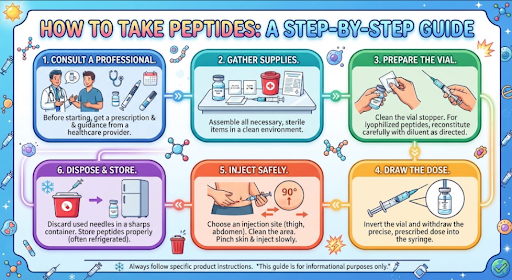
Step-by-Step Guide to Starting a Peptide Diet Program
Step 1: Get a Comprehensive Medical Evaluation
Before anything else, you need an evaluation from a licensed physician, nurse practitioner, or physician assistant — ideally one with specific experience in obesity medicine or metabolic health. This evaluation should include:
- A full medical history, including any history of thyroid disease, pancreatitis, gallbladder disease, or eating disorders
- Current medications and supplements, to check for interactions
- A physical exam, including current weight, height, and BMI
- Blood work, typically including a metabolic panel, lipid panel, HbA1c (blood sugar average), thyroid function, and kidney and liver function tests
Step 2: Choose a Legitimate, Licensed Provider
This is one of the areas where people run into trouble. The popularity of peptide weight loss has led to a wave of online vendors selling “research peptides” or compounded versions without proper medical oversight. Legitimate treatment comes from:
- A licensed physician or medical weight loss clinic
- Telehealth platforms that employ licensed prescribers and require lab work and ongoing check-ins
- Pharmacies that are properly licensed and, where compounding is involved, FDA-registered
Red flags to avoid include providers who prescribe without any medical history review or lab work, vendors selling peptides labeled “not for human consumption” or “for research use only,” and any source that skips physician oversight entirely. Because these medications carry real risks and require dose adjustments over time, ongoing physician involvement isn’t optional — it’s the mechanism that keeps the program safe.
Step 3: Discuss Which Medication Fits Your Situation
Not all peptide medications are the same, and your prescriber will consider your health profile, goals, and any existing conditions (like diabetes) when recommending one. Common options include:
- Semaglutide (Wegovy for weight management, Ozempic for diabetes) — a GLP-1 receptor agonist, typically administered as a once-weekly injection
- Tirzepatide (Zepbound for weight management, Mounjaro for diabetes) — a dual GIP/GLP-1 receptor agonist, also once-weekly
Your prescriber will walk you through starting doses, the schedule for dose increases, and what to expect at each stage. Dosing on these medications is individualized and typically starts low, increasing gradually over weeks to months to minimize side effects — this titration schedule is something your prescriber will manage directly based on how your body responds, not something to determine on your own.
Step 4: Understand and Prepare for Side Effects
Most people experience some gastrointestinal side effects, especially as the dose increases. The most common include nausea, constipation or diarrhea, bloating, and reduced appetite. These tend to be most noticeable in the first few weeks after starting or after a dose increase, and often ease as your body adjusts.
Practical strategies that help many people manage this phase include:
- Eating smaller, more frequent meals rather than large ones
- Prioritizing protein and fiber, and reducing greasy or very rich foods
- Eating slowly and stopping at the first sign of fullness
- Staying well hydrated
- Avoiding lying down immediately after eating
More serious but rarer side effects — such as signs of pancreatitis (severe abdominal pain), gallbladder issues, or allergic reactions — should be reported to your prescriber immediately. This is another reason ongoing medical contact matters throughout the program, not just at the start.
Step 5: Build the Nutritional Framework
Because appetite is significantly reduced on these medications, the quality of what you eat matters more than usual — you’ll be eating less overall, so every meal needs to work harder nutritionally. A good framework typically includes:
- Prioritizing protein at each meal (generally guided by your care team, often in the range of 25–35 grams per meal) to help preserve muscle mass during weight loss
- Including fiber-rich foods like vegetables, legumes, and whole grains to support digestion, which can be sluggish on these medications
- Limiting ultra-processed and high-fat foods, which are more likely to trigger nausea or discomfort
- Avoiding skipping meals entirely, even when appetite is low, to prevent excessive muscle loss and nutrient gaps
Many programs pair patients with a registered dietitian for this piece specifically, since eating “less” successfully is a different skill than eating “differently,” and getting it wrong can mean losing muscle instead of fat.
Step 6: Incorporate Movement, With an Emphasis on Strength
Rapid weight loss — especially when driven by significantly reduced calorie intake — carries a real risk of muscle loss alongside fat loss. Resistance training is one of the most effective tools to counter this. A reasonable approach includes:
- Resistance training 2–4 times per week, targeting major muscle groups
- Regular low-impact cardio (walking is often sufficient) to support cardiovascular health and calorie balance
- Gradually increasing activity as energy levels stabilize, rather than starting aggressively
You don’t need to overhaul your fitness routine overnight. The goal is consistency, not intensity — someone walking daily and lifting twice a week will generally preserve more muscle over a year than someone doing intense workouts sporadically.
Step 7: Set Up Regular Monitoring
A responsible peptide program includes scheduled follow-ups, typically monthly in the early stages, tapering to less frequent visits once you’re on a stable, effective dose. These check-ins usually cover:
- Weight and progress tracking
- Side effect review and dose adjustment if needed
- Periodic lab work to monitor metabolic markers
- Discussion of any new symptoms or concerns
This is also the time to raise questions about long-term plans — many people stay on a maintenance dose indefinitely, since appetite and weight often rebound if the medication is stopped abruptly without a transition plan.
Step 8: Plan for the Long Term
Peptide therapy works best as part of a long-term strategy rather than a short-term fix. Weight regain after stopping GLP-1 medications is common if the underlying habits and support structure aren’t in place. As you progress, work with your care team on:
- A plan for whether and how to eventually reduce dosage
- Sustainable eating and exercise habits that don’t depend on the medication alone
- Ongoing monitoring even after reaching your goal weight, since maintenance is its own phase with its own challenges
What to Watch Out For
A few cautions are worth repeating clearly:
- Avoid unregulated sourcing. Peptides purchased from research-chemical websites or unverified online sellers are not held to pharmaceutical quality and purity standards, and using them without medical supervision carries real safety risks.
- Don’t self-adjust doses. Increasing your dose faster than recommended to speed up results significantly raises the risk of severe side effects without necessarily improving outcomes.
- Don’t skip the lifestyle piece. The medication reduces appetite, but it doesn’t replace the need for adequate protein, movement, and sleep — skipping these makes muscle loss and rebound weight gain more likely.
- Watch for disordered patterns. Because appetite drops so significantly, it’s worth staying attentive to whether your eating patterns remain healthy and sustainable, and raising any concerns with your care team.
Final Thoughts
A peptide diet program can be a genuinely effective tool for weight management when it’s built on a proper medical foundation: a real evaluation, a licensed prescriber, appropriate lab monitoring, and a lifestyle framework that supports the medication rather than ignoring it. The biggest determinant of long-term success isn’t the medication itself — it’s the structure around it. Starting with a qualified provider, being honest about your full health history, and treating the nutritional and activity components as seriously as the prescription itself will put you in the best position to see results that last well beyond the program itself.
If you’re considering this path, the right first move isn’t ordering a peptide online — it’s booking an appointment with a licensed provider who can evaluate your health and walk you through options suited to you specifically.