The meteoric rise of GLP-1 receptor agonists has fundamentally transformed modern medicine, rewriting the playbook for metabolic health, appetite regulation, and chronic weight management. At the epicenter of this cultural and clinical wave is semaglutide—marketed as Ozempic for type 2 diabetes and Wegovy for chronic weight management.
Because both brand names do indeed share the same active molecular compound, a profound public health paradox has emerged. Millions of individuals seeking treatment for obesity or overweight parameters do not carry a formal diagnosis of type 2 diabetes. Consequently, navigating clinical protocols, insurance formularies, off-label prescribing practices, and alternative sourcing channels can feel like walking through a bureaucratic maze.
Understanding how to access these treatments safely, legally, and strategically requires a thorough examination of clinical criteria, regulatory boundaries, and financial navigation paths.
Regulatory Realities: Ozempic vs. Wegovy Specifications
To successfully acquire semaglutide without a diabetes diagnosis, patients must first understand the distinction between FDA-approved indications and off-label utilization.
- The FDA Status of Ozempic: Ozempic is officially approved by the U.S. Food and Drug Administration solely as an adjunct to diet and exercise to improve glycemic control in adults with type 2 diabetes, and to reduce major adverse cardiovascular events in adults with established heart disease.
- The Off-Label Pathway: When a licensed clinician prescribes Ozempic to a patient without diabetes for the primary purpose of reducing body weight, it is classified as an off-label use. Off-label prescribing is a completely legal, standard medical practice where a physician uses their professional judgment to prescribe an FDA-approved drug for a condition other than its primary labeling.
- The Indication Alternative (Wegovy): Formulated with identical semaglutide molecules, Wegovy is explicitly FDA-approved for chronic weight management. It is indicated for adults with a body mass index of thirty or greater (obesity), or a body mass index of twenty-seven or greater (overweight) in the presence of at least one weight-related comorbid condition (such as hypertension, dyslipidemia, or obstructive sleep apnea).
Clinical Qualification Criteria for Non-Diabetic Patients
Even when utilizing medications off-label or pursuing dedicated anti-obesity formulations, licensed practitioners adhere strictly to evidence-based anthropometric and metabolic thresholds before writing a prescription.
Core Biometric Benchmarks
- The BMI Threshold: Patients generally must present with a baseline Body Mass Index of 30 kg/m² or higher.
- The Comorbidity Modifier: Individuals with a BMI ranging between 27 kg/m² and 29.9 kg/m² qualify if they present with a minimum of one weight-aggravated health complication. Qualifying conditions routinely include:
- Essential hypertension
- Dyslipidemia or hypertriglyceridemia
- Cardiovascular disease
- Obstructive sleep apnea
- Non-alcoholic fatty liver disease or MASH
Required Pre-Screening Lab Panels
Responsible clinical evaluation mandates comprehensive baseline bloodwork to rule out contraindications and establish metabolic starting points. Physicians typically review:
- HbA1c and Fasting Glucose: To definitively confirm the absence of undiagnosed type 2 diabetes.
- Comprehensive Metabolic Panel: Assessing baseline renal function and hepatic enzymes.
- Lipid Panel: Tracking baseline cholesterol, low-density lipoproteins, and triglycerides.
- Thyroid-Stimulating Hormone: Ruling out secondary endocrine disorders contributing to weight fluctuations.
Case Studies: Real-World Navigation Without Diabetes
Examining how different patient profiles successfully secure treatment highlights the importance of clinical documentation, strategic formulary navigation, and alternative access pathways.
Case Study A: The Corporate Executive with Metabolic Syndrome
- Patient Profile: A forty-two-year-old male presenting with a BMI of 33.5 kg/m², stage one hypertension, and elevated triglycerides. He does not have type 2 diabetes.
- The Strategy: His primary care physician evaluated him for metabolic syndrome and recommended semaglutide therapy. Because his commercial insurance plan excluded weight-loss drugs from its standard formulary, his physician submitted a prior authorization emphasizing his high cardiovascular risk factors and pre-diabetic insulin resistance markers.
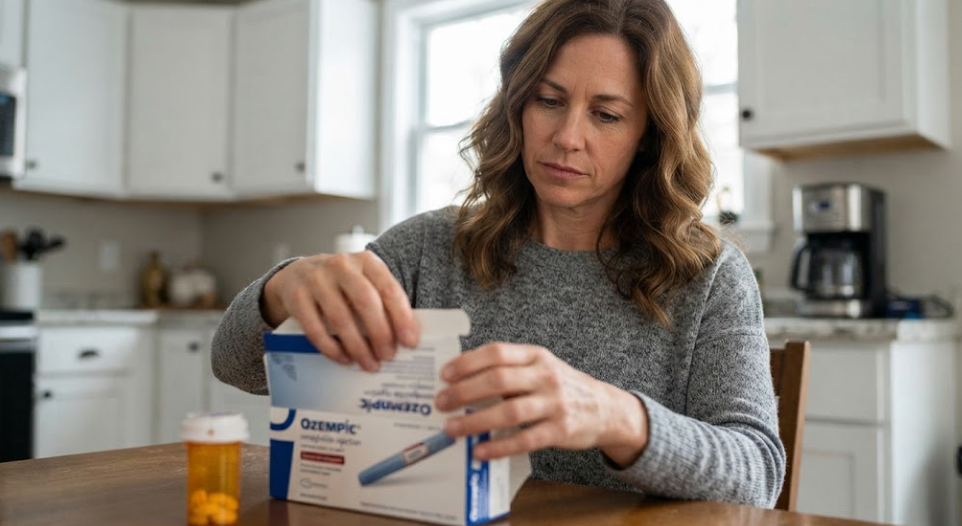
- The Outcome: Although the initial prior authorization for Ozempic was rejected due to lack of a diabetes code, the physician successfully transitioned the prior authorization request to Wegovy, citing recent FDA updates recognizing cardiovascular risk reduction. The insurance plan approved the coverage tier, dropping his monthly copay down to standard tier-three levels.
Case Study B: The Freelance Designer Facing Commercial Insurance Walls
- Patient Profile: A twenty-nine-year-old female with a BMI of 28.2 kg/m² and polycystic ovary syndrome, resulting in stubborn weight retention.
- The Strategy: Her health insurance plan maintained an absolute blanket exclusion for all anti-obesity medications, refusing coverage for both Ozempic and Wegovy. Rather than fighting repeated insurance denials, she consulted a specialized telehealth metabolic clinic.
- The Outcome: The clinician prescribed an individualized treatment plan utilizing alternative fulfillment models, bypassing commercial insurance entirely to protect her out-of-pocket budget while providing safe clinical oversight and dosage titration.
Financial Strategies: Overcoming Insurance Denials and High Cash Costs
When a patient lacks a diabetes diagnosis, commercial health insurance carriers routinely issue coverage denials. Overcoming these financial hurdles requires understanding the available tactical pathways outlined in the evaluation structure below.
Patient Access Pathway Matrix
| Insurance Coverage Status | Primary Action Plan | Secondary Fulfillment Strategy |
| Covered with Prior Authorization | Submit clinical notes proving BMI and comorbidity thresholds | Apply manufacturer co-pay card at preferred retail pharmacy |
| Excluded on Formulary | Appeal for formulary exception or switch to Wegovy | Utilize direct-to-consumer digital manufacturer cash programs |
| Absolute Blanket Exclusion | Bypass commercial insurance entirely | Explore compounding pharmacy pathways or telehealth cash tiers |
Prior Authorization Appeals: If an initial claim is denied, physicians can file an appeal letter detailing medical necessity, historical documentation of failed diet and exercise modifications, and the presence of weight-related comorbidities.- Manufacturer Savings Cards Restrictions: It is critical to note that manufacturer co-pay cards for Ozempic explicitly require a commercial insurance claim with an associated type 2 diabetes diagnosis code to activate savings. Using these cards fraudulently without a diabetes diagnosis violates terms of service. Conversely, specific manufacturer savings programs exist for dedicated weight-loss formulations like Wegovy for commercially insured patients meeting clinical criteria.
- Direct-to-Consumer Cash Programs: Major pharmaceutical manufacturers have launched direct digital health portals to streamline cash-pay fulfillment pathways, offering standardized transparent pricing models that bypass traditional retail pharmacy markups.
Frequently Asked Questions (FAQs)
Can a doctor legally prescribe Ozempic for weight loss if I do not have diabetes?
Yes. Licensed physicians possess the legal authority to write off-label prescriptions for FDA-approved medications when they determine the treatment is clinically appropriate and safe for the patient.
Will health insurance pay for Ozempic if I am only using it for weight loss?
Generally, no. Most standard commercial insurance plans, Medicare Part D, and state Medicaid policies strictly limit Ozempic coverage to patients carrying a confirmed diagnosis of type 2 diabetes.
What BMI is required to qualify for semaglutide therapy?
Clinical guidelines generally require a baseline BMI of 30 kg/m² or higher, or a BMI of 27 kg/m² paired with at least one weight-related comorbidity such as high blood pressure or dyslipidemia.

Is Wegovy better than Ozempic for non-diabetic patients?
Medically speaking, both contain identical active semaglutide molecules. However, Wegovy is explicitly titrated and FDA-approved for chronic weight management, making insurance approvals and official dosing guidelines better aligned for non-diabetic patients.
Can I use an Ozempic manufacturer coupon card without diabetes?
No. Manufacturer co-pay savings cards for Ozempic require the processing of a commercial insurance claim accompanied by an approved type 2 diabetes diagnosis code.
What are the primary medical disqualifiers for taking semaglutide?
Individuals with a personal or family history of medullary thyroid carcinoma or Multiple Endocrine Neoplasia syndrome type 2 must avoid GLP-1 receptor agonists. Other contraindications include a history of severe pancreatitis or active gallbladder disease.
How do telehealth platforms handle non-diabetic prescriptions?
Specialized telehealth platforms review patient intake forms, self-reported biometric data, and lab results. If the patient meets clinical obesity or overweight criteria, licensed providers can issue prescriptions and coordinate direct home delivery.
What should I do if my insurance denies coverage for my prescription?
Your physician can submit a formal prior authorization appeal citing medical necessity, or you can explore alternative cash-pay direct channels, patient assistance foundations, or therapeutic substitution options.
Are there effective alternatives if insurance refuses to cover semaglutide?
Yes. Alternative FDA-approved anti-obesity medications—such as tirzepatide, liraglutide, or oral combination therapies—may have different formulary tier statuses under your specific insurance plan.
How long do patients typically stay on GLP-1 medications for weight management?
Obesity is recognized clinically as a chronic, relapsing metabolic disease. Consequently, clinical trials demonstrate that continuous, long-term administration is typically required to maintain weight loss and metabolic improvements over time.
The Final Word on How to Get Ozempic for Weight Loss Without a Diagnosis
Securing semaglutide therapy without a formal diabetes diagnosis requires patience, diligence, and a clear understanding of the clinical and administrative hurdles involved. While insurance exclusions and strict off-label policies can create initial roadblocks, patients who carefully document their biometric markers, leverage appropriate prior authorization appeals, or explore alternative direct-to-consumer channels can successfully find viable paths forward.
Navigating this complex landscape ultimately underscores the importance of partnering with knowledgeable healthcare providers who understand both the medical nuances of weight management and the realities of modern insurance formularies. Whether transitioning to an explicitly approved anti-obesity alternative like Wegovy or utilizing transparent cash-pay platforms, informed patients are far better positioned to overcome coverage barriers.
Ultimately, treating obesity as a serious, chronic metabolic condition demands long-term strategy rather than a quick fix. By aligning with qualified clinicians, maintaining realistic expectations about out-of-pocket costs, and prioritizing safe medical oversight, individuals can successfully incorporate these breakthrough therapies into a sustainable, life-changing health journey.
Leave a Reply