The Complete Guide to Choosing a Medication, Getting Results & Keeping the Weight Off
GLP-1 medications have transformed the way doctors and patients approach weight management. Treatments such as Wegovy, Zepbound, Ozempic, Mounjaro, Saxenda, and other medications that affect appetite and blood sugar regulation have become some of the most discussed options for people who have struggled to lose weight through diet and exercise alone.
For many people, the appeal is straightforward: these medications can reduce hunger, increase feelings of fullness, and make it easier to control how much food you eat. But GLP-1 treatment is much more complicated than simply taking an injection and watching the pounds disappear. Different medications have different active ingredients, indications, dosing schedules, side effects, costs, and insurance considerations.
This complete guide explains how GLP-1 medications work, who may qualify, how the major medications compare, what weight loss you might realistically expect, how dosing works, what happens during treatment, how to handle side effects, how much these medications cost, whether insurance covers them, where to obtain them safely, and what happens if you eventually stop treatment.
What Are GLP-1 Medications?
GLP-1 stands for glucagon-like peptide-1, a hormone involved in appetite regulation, digestion, and blood-sugar control. GLP-1 receptor agonist medications mimic some of the effects of this naturally occurring hormone.
One of the most important effects for weight management is appetite regulation. These medications can help people feel full sooner, remain satisfied longer, and experience less hunger between meals. They can also slow the movement of food through the stomach, which may contribute to increased fullness after eating.
Some medications in this category also have significant effects on blood glucose and insulin regulation, which is why several were originally developed and approved for type 2 diabetes.
The terminology can sometimes become confusing because not every popular weight-loss medication is technically a GLP-1-only drug. Tirzepatide, the active ingredient in Zepbound and Mounjaro, acts on both GIP and GLP-1 receptors. It is therefore more accurately described as a dual GIP/GLP-1 receptor agonist.
Why GLP-1 Treatment Has Become So Popular
Traditional weight-loss advice often focuses on eating fewer calories and exercising more. Those strategies remain important, but obesity is a complex biological condition. Hunger, satiety, metabolism, genetics, sleep, hormones, medications, environment, and numerous other factors can influence body weight.
For some people, trying to maintain a calorie deficit produces intense hunger and cravings that eventually make continued weight loss extremely difficult.
Modern anti-obesity medications can address part of that biological challenge. Instead of requiring someone to fight hunger through willpower alone, treatment can change appetite and fullness signals that influence food intake.
The National Institute of Diabetes and Digestive and Kidney Diseases notes that prescription weight-management medications work best when combined with lifestyle changes. On average, people taking prescription weight-loss medications may lose more weight than people relying on lifestyle changes alone, although individual results vary considerably.
Who May Be Eligible for Weight-Loss Medication?
Prescription weight-loss medication is generally considered for adults with obesity or for people who are overweight and have health conditions associated with excess weight.
A commonly used starting point is a body mass index, or BMI, of at least 30. Medication may also be considered for someone with a BMI of at least 27 when weight-related health problems are present.
Examples of weight-related conditions can include high blood pressure, abnormal cholesterol, type 2 diabetes and other medical problems associated with excess weight.
BMI is only one part of the evaluation. A healthcare professional may also consider your medical history, current medications, previous weight-loss attempts, family history, eating patterns and other factors.
The goal is not simply to determine whether someone wants to lose weight. The purpose of a medical evaluation is to determine whether prescription treatment is appropriate and safe.
What a Doctor Should Evaluate Before Prescribing
Before starting a weight-loss medication, a healthcare professional may review your medical history and current medications, measure your weight and height, discuss previous weight-loss attempts, and evaluate conditions that could affect treatment.
Your provider may also ask about gastrointestinal problems, diabetes, kidney function, gallbladder problems, pancreatitis, pregnancy plans, and other relevant medical considerations.
Certain medications have important contraindications and warnings. For example, semaglutide products such as Wegovy carry a boxed warning concerning thyroid C-cell tumors and are contraindicated in people with a personal or family history of medullary thyroid carcinoma or in people with Multiple Endocrine Neoplasia syndrome type 2.
That is one reason buying prescription medication from an unknown source simply because it appears cheaper can be dangerous.
The Major Medications People Hear About
The GLP-1 and related medication market includes several brand names that can be confusing, as some contain the same active ingredient but have different approved indications.
Wegovy contains semaglutide and is approved for chronic weight management in appropriate patients. Ozempic also contains semaglutide but is primarily a diabetes medication under its FDA-approved indication.
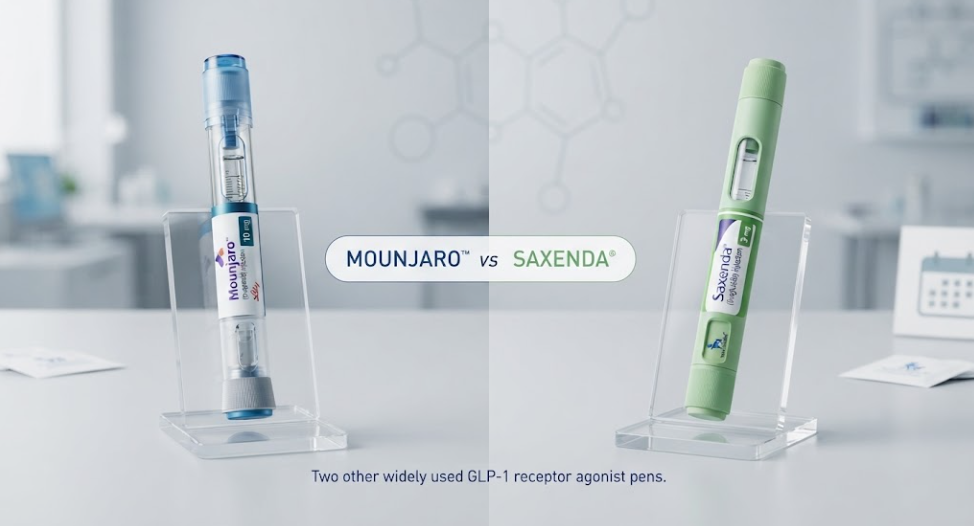
Zepbound contains tirzepatide and is approved for chronic weight management in adults with obesity or overweight plus at least one weight-related condition. Mounjaro also contains tirzepatide but is marketed under its diabetes indication.
Saxenda contains liraglutide and is another prescription medication used for chronic weight management. Victoza contains liraglutide but is a diabetes medication.
Rybelsus contains oral semaglutide and is approved for type 2 diabetes. Wegovy also has an oral tablet formulation under its newer labeling.
These distinctions matter because a medication containing the same or similar active ingredient does not automatically have the same FDA-approved indication, dosing instructions or insurance coverage.
Semaglutide for Weight Loss
Semaglutide is one of the best-known medications in the modern weight-management category.
Wegovy is the semaglutide brand specifically associated with chronic weight management. The medication works partly by activating GLP-1 receptors, influencing appetite, food intake and blood sugar regulation.
People often notice that they become satisfied with smaller portions. Some also experience a reduction in food cravings or what they describe as “food noise.”
However, not everyone responds identically. Some people lose substantial amounts of weight, some experience moderate weight loss, and some lose relatively little.
Wegovy treatment generally begins with a lower dose that is gradually increased. The gradual escalation is designed to help the body adjust to treatment and may reduce gastrointestinal problems.
The FDA has also approved Wegovy HD, a higher-dose 7.2 mg injection for certain adults with obesity or overweight and a weight-related condition.
Tirzepatide for Weight Loss
Tirzepatide has become another major player in prescription obesity treatment. Unlike semaglutide, which primarily activates the GLP-1 receptor, tirzepatide activates both GIP and GLP-1 receptors. Zepbound is the tirzepatide brand approved for chronic weight management.
Clinical studies have shown substantial average weight loss with tirzepatide, although individual results vary and clinical-trial averages do not predict exactly how much any particular person will lose.
Zepbound has also received an FDA indication for moderate-to-severe obstructive sleep apnea in adults with obesity, when used alongside reduced-calorie eating and increased physical activity.
Ozempic and Weight Loss
Ozempic is one of the most recognizable names associated with semaglutide. It contains semaglutide and is FDA-approved for type 2 diabetes under its specific indication. Weight loss can occur in people taking it, which is one reason the brand became so widely discussed in popular culture.
However, people looking specifically for an FDA-approved semaglutide medication for chronic weight management should understand the distinction between Ozempic and Wegovy.
Using a medication for an indication different from the one appearing on its FDA-approved labeling is something that should be discussed with a qualified healthcare professional.
Mounjaro and Weight Loss
Mounjaro contains tirzepatide, the same active ingredient found in Zepbound. Mounjaro’s primary FDA-approved indication is type 2 diabetes, while Zepbound is the tirzepatide brand approved for chronic weight management.
Because the active ingredient is the same, people frequently compare the two products. However, brand names, FDA indications, insurance coverage and dosing considerations can differ.
Saxenda and Liraglutide
Saxenda contains liraglutide and is another FDA-approved prescription option for chronic weight management. Unlike weekly medications such as Wegovy and Zepbound, liraglutide treatment uses daily injections.
Saxenda is an older generation of weight-management medication compared with semaglutide and tirzepatide, but it remains an important option for some patients.
How Much Weight Can You Lose With GLP-1 Medication?
This is one of the most common questions people ask before starting treatment. There is no single guaranteed number. Clinical trials provide averages, but an average does not mean every patient will achieve that result. Some people respond extremely well, while others have a more modest response.
Your starting weight, medication, dose, adherence, eating pattern, physical activity, genetics, medical conditions, and other factors can influence the outcome. The NIDDK notes that prescription weight-loss medications can produce substantially greater weight loss than lifestyle changes alone, although results vary by medication and individual.
It is generally more useful to think about weight loss as a percentage of starting body weight rather than focusing exclusively on a specific number of pounds. For example, losing 10% of body weight means something very different for a person starting at 180 pounds than for someone starting at 300 pounds.
What Happens to Appetite?
One of the earliest noticeable changes for many people is appetite. You may find that you are not thinking about food as frequently. You may become full after eating a smaller portion. You may also notice that snacks you previously found difficult to resist become easier to ignore.
This does not necessarily mean that hunger disappears completely. The goal is not starvation. The goal is improved appetite control that makes a sustainable eating pattern easier to maintain.
What Happens to Food Cravings?
Cravings can change during treatment, although this varies from person to person. Some patients describe a significant reduction in cravings for sweets, fast food or highly processed foods. Others experience less dramatic changes.
A reduction in cravings can make a calorie deficit easier to maintain without feeling like every meal is a battle against hunger. However, medication does not automatically create healthy eating habits. The best long-term results generally come from using improved appetite control as an opportunity to establish sustainable nutrition habits.
The First Weeks of Treatment
The beginning of treatment is often more about adjustment than dramatic weight loss. Many medications begin at a lower dose and increase gradually. This gives the body time to adapt.
During the early period, some people notice reduced appetite almost immediately. Others feel little difference at first. It is important not to assume that a low starting dose represents the medication’s final effect. Dose escalation is commonly built into the treatment plan.
At the same time, increasing the dose faster than instructed is not a shortcut to better results. Following the prescribed schedule is important.
Why Dose Escalation Matters
Gastrointestinal side effects are among the most common problems associated with GLP-1 medications. Nausea, diarrhea, constipation, vomiting, and abdominal discomfort can occur, particularly when starting treatment or increasing the dose.
Gradual dose escalation can help the body adjust. If side effects become severe or persistent, contact your healthcare provider rather than attempting to modify the prescription yourself.
What Should You Eat While Taking a GLP-1?
There is no single “GLP-1 diet.” A useful eating pattern generally emphasizes foods that provide substantial nutrition without requiring huge portions.
Protein is especially important because losing weight can involve losing both fat and lean tissue. Maintaining adequate protein intake can support muscle preservation when combined with appropriate resistance exercise.
Good protein sources can include lean meat, poultry, fish, eggs, Greek yogurt, cottage cheese, beans, lentils, and other protein-rich foods. Vegetables, fruit, whole grains and other minimally processed foods can provide fiber, vitamins and minerals.
The goal is not to eat as little as possible. The goal is to create a nutritionally adequate diet that produces appropriate weight loss while supporting health.
Protein and Muscle Preservation
Rapid weight loss can involve some loss of lean mass. This makes resistance training particularly valuable during weight-loss treatment. Strength training can help provide the body with a reason to maintain muscle while body weight decreases. Protein intake can also support muscle maintenance.
People using appetite-suppressing medications sometimes struggle to consume enough food overall. That makes nutrient quality increasingly important. A small meal containing protein, vegetables and another nutrient-dense carbohydrate or fat source may provide more nutritional value than a much larger meal dominated by highly processed foods.
Hydration Matters
Reduced food intake, vomiting, diarrhea, and other gastrointestinal symptoms can increase the risk of dehydration. Water should generally remain the primary beverage for most people.
Some patients find that drinking smaller amounts throughout the day is easier than consuming a large quantity at once, particularly if they experience nausea.
Persistent vomiting, severe diarrhea, or symptoms of significant dehydration should be discussed promptly with a healthcare professional.
Exercise While Taking GLP-1 Medication
Exercise is not obsolete simply because medication helps control appetite. Physical activity can support cardiovascular health, fitness, mobility, mood, and muscle preservation.
Walking is a practical starting point for many people. Resistance training can become particularly important as weight decreases. The appropriate exercise program depends on your health, fitness level, age, and medical history.
The objective is not to burn as many calories as possible. A sustainable routine is usually more valuable than an extreme program that cannot be maintained.
Why Muscle Matters During Weight Loss
The number on the scale does not tell the whole story. Two people can lose the same amount of weight while experiencing different changes in body composition. Preserving muscle can help maintain strength, mobility, and physical function.
This is one reason a comprehensive weight-management strategy should look beyond the scale. Measurements such as waist circumference, clothing fit, strength, and fitness can provide useful additional information.
What About Sleep?
Sleep can have a significant effect on appetite, energy, and overall health. Poor sleep may make hunger and food cravings harder to manage and can make exercise more difficult.
A consistent sleep schedule, a comfortable sleeping environment, and good sleep habits can support a broader weight-management strategy.
People with symptoms of sleep apnea should discuss them with a healthcare professional. Weight loss can be relevant to sleep apnea, and Zepbound has an FDA-approved indication for moderate-to-severe obstructive sleep apnea in certain adults with obesity.
How to Track Progress
Weighing yourself can be useful, but daily fluctuations are normal. Body weight can change because of water, sodium intake, bowel movements, hormones, carbohydrate intake, and other factors.
Looking at trends over several weeks is often more informative than reacting to a single day’s measurement. You may also want to track waist measurements, clothing fit, physical activity, strength, and how your appetite changes. The goal is to identify a sustainable trend rather than obsess over every fluctuation.
What Is a Weight-Loss Plateau?
A plateau occurs when weight loss slows or temporarily stops. Plateaus are normal. As body weight decreases, the body requires fewer calories to maintain itself. Appetite and energy expenditure can also change.
A plateau does not automatically mean the medication has stopped working. Before assuming treatment has failed, consider your overall trend, medication dose, adherence, eating pattern, activity level, sleep, and other factors.
If progress has genuinely stalled for a prolonged period, discuss it with your healthcare provider.
What If the Medication Isn’t Working?
Not everyone responds strongly to every medication. If you have little or no meaningful weight loss after an appropriate treatment period, your healthcare professional may reassess the diagnosis, adherence, dose, medical conditions, medications, and other factors.
NIDDK guidance notes that people who do not achieve sufficient weight loss after reaching a full dose may need to discuss whether continuing that particular medication makes sense.
A lack of response to one medication does not necessarily mean that every weight-management medication will fail.
Can You Switch From One Medication to Another?
Sometimes a healthcare professional may recommend changing medications. For example, a person who does not tolerate one treatment may be evaluated for another option. A switch may also be considered when the response is insufficient.
Medication changes should be planned with a healthcare professional because dosing schedules and escalation protocols differ. Do not combine GLP-1 medications or change doses on your own.
Common Side Effects
Gastrointestinal symptoms are among the most common side effects associated with GLP-1 and related medications. These can include nausea, vomiting, diarrhea, constipation and abdominal discomfort.
Side effects may be more noticeable when treatment begins or when the dose increases. Eating smaller meals, avoiding very large or high-fat meals, and staying adequately hydrated may help some people tolerate treatment, but persistent or severe symptoms require medical attention.
Serious Risks and Warnings
GLP-1 medications are powerful prescription drugs and are not appropriate for everyone. Depending on the medication, warnings and potential adverse effects can include gastrointestinal problems, gallbladder disease, pancreatitis, kidney problems related to dehydration, and other complications.
Wegovy’s current FDA labeling includes warnings related to acute kidney injury associated with volume depletion and severe gastrointestinal adverse reactions, among other risks. Seek medical attention for severe or unusual symptoms rather than assuming they are simply normal medication side effects.
The Thyroid Cancer Warning
The thyroid warning associated with certain GLP-1 medications receives significant attention. For Wegovy, the FDA label includes a boxed warning concerning thyroid C-cell tumors. Wegovy is contraindicated in people with a personal or family history of medullary thyroid carcinoma or people with MEN 2.
This does not mean that every person taking a GLP-1 medication will develop thyroid cancer. It does mean that people with the specified history should not use the medication and that the issue should be discussed during the prescribing process.
GLP-1 Medications and Pregnancy
Weight-loss medications are not intended for use during pregnancy. People who are pregnant, planning pregnancy or who could become pregnant should discuss their circumstances with their healthcare professional before starting treatment.
NIDDK specifically advises against using weight-management medications during pregnancy or when planning to become pregnant.
Can GLP-1 Medication Treat Diabetes?
Several medications in this category were developed specifically for type 2 diabetes. Semaglutide and tirzepatide can have substantial effects on blood glucose, insulin regulation, and body weight.
The specific medication and brand should be selected according to the patient’s medical condition and FDA-approved indications. A person with diabetes should not assume that a medication marketed for weight loss is automatically the correct treatment for their diabetes.
GLP-1 Medication and Cardiovascular Health
Weight management can have important cardiovascular implications. Wegovy received an FDA indication to reduce the risk of major cardiovascular events in certain adults with cardiovascular disease and obesity or overweight.
This is an important development because it demonstrates that modern obesity treatment is increasingly being viewed as more than a cosmetic intervention.
For appropriate patients, treating obesity may be part of reducing risks associated with chronic disease.
GLP-1 Medication and Sleep Apnea
Obesity is strongly associated with obstructive sleep apnea. In December 2024, the FDA approved Zepbound for moderate-to-severe obstructive sleep apnea in adults with obesity, alongside a reduced-calorie diet and increased physical activity.
This represents another example of how weight-management medications can intersect with conditions beyond body weight itself.
How Much Do GLP-1 Medications Cost?
Cost is one of the biggest concerns for people considering treatment. There is no universal price. What you pay can depend on your insurance, the medication, dosage, pharmacy, manufacturer savings program, eligibility, and whether you are paying cash.
Manufacturer self-pay programs can also change over time. For example, current manufacturer programs have advertised Wegovy self-pay pricing that varies by dose and formulation, while Zepbound’s current self-pay programs begin around $299 per month for certain patients and doses. Eligibility and program terms apply.
Because pricing changes, patients should verify current prices directly with the manufacturer, pharmacy or insurer rather than relying on an old article or social-media post.
Does Insurance Cover GLP-1 Medication?
Insurance coverage varies significantly. Some employer-sponsored insurance plans cover obesity medications. Others exclude them entirely. Coverage for diabetes treatment can also be different from coverage for obesity treatment.
Medicare coverage has historically had significant restrictions surrounding weight-loss medications, although the landscape is changing as new programs and indications become available.
The best way to determine your actual cost is to check your specific insurance plan and ask whether the medication is covered for the indication for which it is being prescribed.
Medicare and GLP-1 Treatment
Medicare policy surrounding GLP-1 medications continues to evolve. Beginning July 1, 2026, eligible Medicare beneficiaries may be able to obtain Zepbound KwikPen through the Medicare GLP-1 Bridge program for no more than $50 per month under the program’s terms.
Eligibility and program rules matter, so patients should verify their current status rather than assuming that every Medicare beneficiary qualifies.
Manufacturer Savings Programs
Drug manufacturers sometimes offer savings programs for eligible commercially insured patients and cash-paying patients. Wegovy’s manufacturer, for example, currently advertises self-pay pricing and savings opportunities subject to eligibility and program terms.
Some qualifying patients may also be eligible for patient assistance programs that provide medication at no cost. Novo Nordisk operates a patient assistance program for qualifying patients.
Where Can You Buy GLP-1 Medication?
FDA-approved prescription GLP-1 medications should be obtained through legitimate prescription channels. That generally means receiving a prescription from an appropriate healthcare professional and filling it through a legitimate pharmacy.
Patients should be extremely cautious about websites offering prescription medication without a legitimate medical evaluation. The FDA recommends obtaining compounded medications from state-licensed pharmacies and has warned consumers about unapproved versions of semaglutide and tirzepatide.
What About Online GLP-1 Clinics?
Telehealth has made prescription weight-management treatment more accessible to many people. A legitimate telehealth provider can conduct a medical evaluation, review medical history, determine whether treatment is appropriate, and issue a prescription when clinically justified.
However, not every online clinic operates the same way. Before choosing an online provider, look for clear information about the clinicians, prescription process, pharmacy, follow-up care, pricing, and what happens if you experience side effects.
Be especially cautious when a website focuses almost entirely on cheap medication without explaining medical supervision.
Compounded Semaglutide and Tirzepatide
Compounded GLP-1 medications have become a major part of the weight-loss market, largely because of cost and availability. However, compounded medications are not the same thing as FDA-approved products.
The FDA has warned about unapproved compounded versions of semaglutide and tirzepatide. FDA-approved drugs undergo review for safety, effectiveness, and manufacturing quality before approval. Unapproved compounded versions do not go through that same FDA approval process.
The FDA has also specifically warned about issues involving products marketed using semaglutide salts such as semaglutide sodium or acetate rather than the active ingredient used in FDA-approved products.
Patients considering compounded treatment should discuss the risks and benefits with a qualified healthcare professional and use a legitimate, appropriately licensed pharmacy.
Why Cheap GLP-1 Products Can Be Risky
An unusually low price should not automatically be interpreted as a bargain. Prescription medications require appropriate storage, manufacturing controls, labeling, and quality standards.
The FDA has reported adverse-event reports associated with compounded semaglutide and tirzepatide, although an adverse-event report does not necessarily establish that the medication caused the event.
Consumers should be especially cautious about products sold through social-media accounts, websites that bypass prescriptions, or sellers who cannot clearly identify the pharmacy and medication source.
What Happens If You Stop Taking a GLP-1?
One of the biggest misconceptions about weight-loss medication is that losing weight means treatment is permanently finished.
Obesity is generally considered a chronic condition, and biological pressures that contributed to weight gain can remain after weight loss. NIDDK notes that some weight regain can occur after stopping prescription weight-loss medication. That does not mean everyone regains all of the weight.
It means that stopping treatment should be considered part of a medical strategy rather than treated as an automatic endpoint.
Long-Term Treatment May Be Necessary
Some people may remain on medication for an extended period if it is effective and well tolerated. The purpose of long-term treatment is not simply to continue losing weight indefinitely.
Once a person reaches a healthier and sustainable weight, the objective may shift toward maintenance. The appropriate duration depends on the medication, response, side effects, health goals and clinical judgment.
Maintaining Weight Loss
Maintenance deserves as much attention as losing the weight. A person who reaches their goal weight still needs a strategy for managing appetite, nutrition, activity, and lifestyle.
Some people may continue medication. Others may eventually taper or discontinue treatment under medical supervision. There is no universal maintenance plan. The most successful long-term strategy is the one that can realistically be sustained.
What Happens to Hunger After Weight Loss?
Hunger can increase as body weight decreases. This is one reason maintaining significant weight loss can be difficult without continued support.
The biological systems that regulate appetite do not necessarily stop responding simply because someone has reached a target weight. This is another reason obesity treatment should be viewed as a long-term health strategy rather than a short-term crash diet.
Is a GLP-1 a Magic Weight-Loss Drug?
No, it’s not at all. GLP-1 medications can be extremely effective, but they do not eliminate the need for medical supervision or healthy habits. They do not guarantee a specific amount of weight loss.
They do not make poor nutrition harmless. They do not eliminate the importance of physical activity. And they are not appropriate for everyone.
Their greatest value may be that they make the behavioral side of weight management substantially more manageable for people whose biology has made weight loss particularly difficult.
Common Mistakes People Make
One common mistake is expecting dramatic weight loss immediately. Another is eating extremely large meals even after appetite has decreased. Large, high-fat meals can be particularly uncomfortable for some people taking appetite-regulating medications.
Another mistake is ignoring protein and resistance training while losing weight. Some people also become overly focused on the scale and fail to recognize improvements in waist size, fitness, blood sugar, blood pressure, or mobility.
Perhaps the most serious mistake is purchasing medication from an unreliable source simply because the price is lower.
Questions to Ask Before Starting Treatment
A good medical appointment should provide an opportunity to ask questions. You may want to ask why a particular medication is being recommended, what starting dose will be used, how the dose will increase, what side effects to expect, what symptoms require immediate attention, and how long treatment is expected to continue.
You can also ask about the total expected cost, insurance coverage, pharmacy options, and what happens if the medication does not produce sufficient weight loss. Understanding the treatment plan before starting can make the process much less confusing.
Questions to Ask an Online Weight-Loss Provider
If you use telehealth, ask who is actually prescribing the medication and whether a licensed clinician reviews your medical history. Ask which pharmacy will fill the prescription and whether you will receive an FDA-approved medication.
Ask how follow-up appointments work and who you contact if you experience a significant side effect. You should also understand the complete monthly cost rather than focusing only on a low introductory price.
The Future of GLP-1 Weight Management
The GLP-1 category is continuing to evolve rapidly. New formulations, higher doses, oral medications, and additional indications are changing the treatment landscape.
Wegovy’s newer formulations demonstrate how quickly this market is developing. The FDA approved Wegovy HD at a 7.2 mg dose in March 2026 for certain adults with obesity or overweight and a weight-related condition.
Patients should therefore be cautious about relying on outdated information when comparing medications or prices.
GLP-1 Weight Loss Frequently Asked Questions
What is a GLP-1 medication?
A GLP-1 medication is a prescription drug that activates receptors associated with the naturally occurring hormone glucagon-like peptide-1. These medications can affect appetite, fullness, digestion, and blood sugar regulation. Some newer medications, including tirzepatide, act on both GIP and GLP-1 receptors.
What is the best GLP-1 for weight loss?
There is no universally best medication. Tirzepatide and semaglutide are among the most prominent modern obesity treatments, and clinical trials have shown substantial average weight loss with both. The appropriate choice depends on medical history, eligibility, side effects, cost, insurance, and individual response.
Is Ozempic approved for weight loss?
Ozempic contains semaglutide and is FDA-approved under its diabetes indication. Wegovy is the semaglutide brand specifically approved for chronic weight management.
Is Mounjaro approved for weight loss?
Mounjaro contains tirzepatide and is marketed under its type 2 diabetes indication. Zepbound contains the same active ingredient and is approved for chronic weight management.
How quickly does GLP-1 weight loss begin?
Some people notice appetite changes soon after beginning treatment, while others notice little initially. Weight loss generally develops over time, and many medications use gradual dose escalation.
How much weight can you lose with Wegovy?
Weight loss varies considerably. Clinical-trial averages can provide context, but they do not guarantee an individual’s result.
How much weight can you lose with Zepbound?
Clinical trials have demonstrated substantial average weight loss with tirzepatide. Individual results can be considerably higher or lower than the trial average.
Do GLP-1 medications reduce hunger?
Yes. Appetite reduction is one of their major effects. Many patients report feeling full sooner and being less interested in food.
Do GLP-1 medications stop cravings?
They may reduce cravings for some people, but the effect varies. Medication can make cravings easier to manage without necessarily eliminating them.
Do you have to diet while taking a GLP-1?
A healthy eating pattern remains important. Medication works best as part of a comprehensive weight-management strategy rather than as a replacement for nutrition.
Can you drink alcohol while taking a GLP-1?
Alcohol can interact with your overall health and may worsen certain gastrointestinal symptoms. The appropriate amount, if any, should be discussed with your healthcare professional.
Can GLP-1 medications cause nausea?
Yes. Nausea is one of the commonly reported side effects, particularly when treatment begins or the dose increases.
Can GLP-1 medications cause constipation?
Yes. Constipation can occur in some people. Hydration, dietary fiber and physical activity may help, although persistent symptoms should be discussed with a healthcare professional.
Can GLP-1 medications cause diarrhea?
Yes. Diarrhea is another possible gastrointestinal side effect.
Can GLP-1 medications cause vomiting?
Yes. Vomiting can occur. Severe or persistent vomiting can cause dehydration and requires medical attention.
Can GLP-1 medications cause stomach pain?
Abdominal discomfort can occur. Severe or persistent abdominal pain should not simply be dismissed as a routine side effect.
Are GLP-1 medications safe?
They can be appropriate and effective for many patients when prescribed and monitored properly, but they also have important risks, contraindications, and warnings.
Can you take two GLP-1 medications together?
You should not combine GLP-1 medications unless specifically instructed by your healthcare professional. Wegovy’s labeling, for example, states that it should not be used with other semaglutide-containing products or other GLP-1 receptor agonists.
Can you take Wegovy and Ozempic together?
No. Both contain semaglutide, and combining them is not appropriate.
Can you take Zepbound and Mounjaro together?
They contain the same active ingredient, tirzepatide, so they should not be combined.
Are GLP-1 injections painful?
The injections use a small needle, and many people find them relatively easy to administer. Individual experiences vary.
Are GLP-1 medications injections?
Many are injectable, but oral formulations are also available. The exact route depends on the medication.
Is there a pill version of GLP-1 medication?
Yes. Oral GLP-1 treatment is available for certain indications, and Wegovy now has an oral tablet formulation under its FDA-approved labeling.
Are GLP-1 medications covered by insurance?
Some insurance plans cover them and others do not. Coverage can also depend on whether the medication is being prescribed for diabetes, obesity or another approved indication.
Does Medicare cover GLP-1 medications?
Medicare coverage depends on the medication, indication and applicable program rules. Newer programs are changing access for some beneficiaries.
How much do GLP-1 medications cost without insurance?
Cash prices vary significantly by medication, dose, manufacturer program and pharmacy. Current manufacturer self-pay programs can reduce the cost for eligible patients.
Is Zepbound cheaper than Wegovy?
The answer depends on the dose, program and insurance situation. Manufacturer cash-pay prices change, so current pricing should be checked before making a decision.
Is compounded semaglutide safe?
Compounded semaglutide is not the same as an FDA-approved semaglutide product. The FDA has raised concerns about unapproved compounded products and recommends obtaining prescriptions through legitimate healthcare and pharmacy channels.
Is compounded tirzepatide safe?
The FDA has raised concerns about unapproved compounded tirzepatide products. Anyone considering compounded treatment should discuss the risks and source with a qualified healthcare professional.
Why are compounded GLP-1 drugs cheaper?
Compounded medications may have different pricing structures than FDA-approved branded products. However, a lower price does not mean equivalent regulatory review, manufacturing standards, or labeling.
Can you buy GLP-1 medication online?
Yes, legitimate telehealth providers and online pharmacies can provide prescription medications when appropriate. Avoid websites that sell prescription drugs without appropriate medical evaluation.
Do you need a prescription for Wegovy?
Yes. Wegovy is a prescription medication.
Do you need a prescription for Zepbound?
Yes. Zepbound is a prescription medication.
Can GLP-1 medication be used forever?
Some people may remain on treatment long term. Obesity is a chronic condition, and treatment duration should be determined with a healthcare professional.
Will you regain weight after stopping a GLP-1?
Some weight regain can occur after stopping treatment. How much varies by individual, and maintenance planning is important.
Can you stop a GLP-1 suddenly?
The appropriate discontinuation plan depends on the medication and individual circumstances. Do not stop or alter prescription treatment without discussing it with your healthcare professional.
Do GLP-1 medications build muscle?
No. Their primary purpose is not muscle building. Because weight loss can include loss of lean mass, protein intake and resistance training can be important parts of treatment.
Should you lift weights while taking a GLP-1?
Resistance training can be useful for maintaining muscle and strength during weight loss, assuming it is medically appropriate for you.
Can you exercise while taking a GLP-1?
Most people who are medically cleared for exercise can remain physically active during treatment. Your appropriate exercise intensity depends on your health and fitness level.
Can GLP-1 medications help with diabetes?
Several medications in this category are specifically approved for type 2 diabetes and can improve blood-glucose control.
Can GLP-1 medications help sleep apnea?
Zepbound is FDA-approved for moderate-to-severe obstructive sleep apnea in certain adults with obesity, in combination with reduced-calorie eating and increased physical activity.
Can GLP-1 medications reduce cardiovascular risk?
Wegovy has an FDA indication for reducing the risk of major cardiovascular events in certain adults with cardiovascular disease and obesity or overweight.
Can older adults take GLP-1 medications?
Age alone does not determine whether someone is an appropriate candidate. Medical history, kidney function, other medications, nutrition, muscle mass, and overall health should be considered.
Can teenagers take GLP-1 medication?
Certain medications have FDA-approved indications for adolescents under specific circumstances. Treatment should be managed by an appropriate healthcare professional.
Can you take GLP-1 medication during pregnancy?
Weight-management medications should not be used during pregnancy. Anyone who is pregnant or planning pregnancy should discuss medication use with their healthcare provider.
What happens if GLP-1 medication stops working?
A plateau does not necessarily mean treatment has failed. Your healthcare professional can evaluate adherence, dose, lifestyle factors and other possible explanations and determine whether a change in treatment is appropriate.
Should you choose semaglutide or tirzepatide?
Both can be highly effective. The appropriate choice depends on your medical situation, treatment goals, side-effect profile, cost, insurance and response to therapy.
Is GLP-1 medication better than dieting alone?
For people who are appropriate candidates, prescription medication can produce more weight loss than lifestyle intervention alone. Medication is generally intended to complement—not replace—healthy eating and physical activity.
The Bottom Line on Choosing the Best GLP-1 Medications
GLP-1 medications have changed the weight-loss landscape by giving healthcare professionals new tools for treating obesity and related health conditions.
The most important thing to understand is that these medications are not all the same. Semaglutide and tirzepatide have different mechanisms, brand names have different FDA-approved indications, dosing schedules vary, prices change, and insurance coverage can be complicated.
Wegovy and Zepbound are among the major FDA-approved options specifically associated with chronic weight management, while Ozempic and Mounjaro are primarily associated with their type 2 diabetes indications. Other medications, including Saxenda, remain part of the broader treatment landscape.
For the right patient, medication can make appetite control significantly easier and can produce meaningful weight loss. But successful treatment involves much more than the medication itself. Nutrition, protein intake, resistance training, physical activity, sleep, medical monitoring, and long-term maintenance all matter.
The safest approach is to work with a qualified healthcare professional, obtain medication through legitimate prescription channels, and understand exactly what you are taking, why you are taking it, how to dose it, what it costs, and which side effects require medical attention.
Most importantly, think about GLP-1 treatment as part of a long-term health strategy rather than a temporary crash diet. Losing weight is only one objective. Maintaining that weight loss and improving overall health are what ultimately matter.
___________________________________
Sources
- Di Odoardo, L. A. F., Zucchetti, O., Sciatti, E., D’Isa, S., D’Elia, E., & Senni, M. (2025). Obesity update: cardiovascular risk and therapeutic innovations. Multidisciplinary Digital Publishing Institute / Translational Medicine Communications, 12001795. https://pmc.ncbi.nlm.nih.gov/articles/PMC12001795/ Cited by: 6
- Mamas, M. A., et al. (2025). Tirzepatide compared with semaglutide and 10-year cardiovascular risk reduction in obesity and overweight. European Heart Journal – Open, 5(5), oeaf117. https://doi.org/10.1093/ehjopen/oeaf117. Cited by: 31
- Rosen, C. J. (2025). Glucagon-like peptide-1 receptor agonists. The New England Journal of Medicine, NEJMra2500106. https://www.ovid.com/journals/nejm/fulltext/10.1056/nejmra2500106~glp-1-receptor-agonists Cited by: 69
- Wharton, S., et al. (2025). Once-weekly semaglutide 2.4 mg in adults with obesity (STEP UP): a randomised, controlled, phase 3b trial. The Lancet Diabetes & Endocrinology, 2500226-8. https://doi.org/10.1016/S2213-8587(25)00226-8
- Wharton, S., et al. (2025). Oral semaglutide at a dose of 25 mg in adults with overweight or obesity. The New England Journal of Medicine, NEJMoa2500969. https://www.nejm.org/doi/10.1056/NEJMoa2500969
Leave a Reply