Complete Guide to Semaglutide, Tirzepatide, Costs, Dosing, Side Effects & More
GLP-1 medications have transformed the treatment of obesity and have become some of the most widely discussed prescription medications in the world.
Names such as Wegovy, Ozempic, Zepbound, Mounjaro, Saxenda, Victoza, and Rybelsus are now familiar to millions of people looking for help with weight loss, blood sugar control, or both.
But with so much information online, it can be difficult to understand the differences between these medications, which ones are actually approved for weight loss, how much weight people typically lose, what they cost, whether insurance pays for them, how often they are taken, and what side effects can occur.
This comprehensive guide explains the basics of GLP-1 medications and the newer dual-action medication tirzepatide. It covers the major brands, how these medications work, expected weight loss, dosing, side effects, costs, insurance coverage, online prescriptions, compounded medications, what happens after stopping treatment, and many of the most common questions people ask before starting treatment.
Quick Answer: What Are GLP-1 Medications?
GLP-1 medications are prescription drugs that mimic or activate the effects of glucagon-like peptide-1, a hormone involved in appetite regulation, digestion, blood sugar control, and feelings of fullness.
Some medications, such as semaglutide, primarily activate the GLP-1 receptor. Tirzepatide, the active ingredient in Zepbound and Mounjaro, activates both the GLP-1 and GIP receptors.
These medications can reduce appetite, increase feelings of fullness, slow stomach emptying, and help many people consume fewer calories.
For people who meet the medical criteria for treatment, prescription weight-management medications can produce substantially more weight loss than lifestyle changes alone. NIDDK notes that, on average, people taking prescription weight-loss medications may lose 3% to 12% more of their starting body weight after one year than people using lifestyle treatment alone, although results vary considerably from person to person.
The most important prescription medications to understand today include:
| Medication | Active ingredient | Main use |
| Wegovy | Semaglutide | Chronic weight management |
| Ozempic | Semaglutide | Type 2 diabetes |
| Rybelsus | Semaglutide | Type 2 diabetes |
| Zepbound | Tirzepatide | Weight management and certain adults with obesity and OSA |
| Mounjaro | Tirzepatide | Type 2 diabetes |
| Saxenda | Liraglutide | Chronic weight management |
| Victoza | Liraglutide | Type 2 diabetes |
| Trulicity | Dulaglutide | Type 2 diabetes |
The brand name matters because the same active ingredient can be marketed under different brand names, at different doses, for different FDA-approved indications.
What Does GLP-1 Stand For?
GLP-1 stands for glucagon-like peptide-1.
It is a naturally occurring hormone released primarily by the intestine after eating.
GLP-1 plays several important roles in the body. It helps regulate blood glucose and influences appetite and food intake. GLP-1-based medications take advantage of these biological effects.
NIDDK explains that GLP-1 medications target areas of the brain involved in appetite and food intake.
For someone trying to lose weight, one of the most noticeable effects may be a reduction in hunger.
A person who previously thought about food constantly may find that food becomes less interesting. Large meals may become uncomfortable, portions may naturally become smaller, and cravings may decrease.
That does not happen identically for everyone.
How Do GLP-1 Weight Loss Drugs Work?
GLP-1 medications can affect several systems simultaneously.
1. They can reduce appetite
One of the most important effects is reduced hunger.
The medications act on appetite-regulating pathways in the brain and can increase the sensation of fullness.
This can make it easier for some people to maintain a calorie deficit without feeling as though they are constantly fighting hunger.
2. They can increase fullness
A smaller meal may feel more satisfying.
This can be especially useful for people who struggle with portion control.
3. They can slow stomach emptying
GLP-1 medications can slow the movement of food from the stomach into the small intestine.
This can contribute to prolonged fullness.
It can also contribute to gastrointestinal side effects such as nausea, vomiting, constipation, diarrhea, bloating, or abdominal discomfort.
4. They affect blood sugar
GLP-1 receptor agonists can improve glucose regulation.
This is one reason several medications in this class were originally developed or approved for type 2 diabetes.
5. They can reduce overall calorie intake
Ultimately, weight loss occurs when energy intake is lower than energy expenditure over time.
GLP-1 medications can make that calorie deficit easier to achieve for some people by reducing appetite and increasing satiety.
What Is Tirzepatide?
Tirzepatide is different from traditional GLP-1 receptor agonists because it activates two hormone receptors: GIP and GLP-1. The medication is sold under different brand names for different indications.
Mounjaro is the tirzepatide brand used for type 2 diabetes, while Zepbound is approved for chronic weight management in adults with obesity or overweight plus at least one weight-related condition. Zepbound is also FDA-approved for moderate-to-severe obstructive sleep apnea in adults with obesity.
This dual mechanism is one reason tirzepatide has attracted enormous attention in the weight-management market.
GLP-1 vs GIP: What’s the Difference?
GLP-1 and GIP are both hormones involved in metabolism. Traditional GLP-1 medications primarily activate the GLP-1 receptor. Tirzepatide activates both GIP and GLP-1 receptors.
Rather than thinking of GIP as simply “better” than GLP-1, it is more accurate to understand tirzepatide as a medication with a different mechanism that has demonstrated substantial weight-loss effects in clinical studies.
Individual results still vary.
Which GLP-1 Medications Are Approved for Weight Loss?
Not every medication commonly called a “GLP-1” is approved specifically for weight loss. This distinction is extremely important.
Wegovy
Wegovy contains semaglutide and is an FDA-approved prescription medication for chronic weight management when used with a reduced-calorie diet and increased physical activity.
Wegovy is available as an injection and, under current labeling, as an oral tablet.
Zepbound
Zepbound contains tirzepatide.
It is approved for chronic weight management in adults with obesity, or adults who are overweight and have at least one weight-related medical condition. It is also approved for moderate-to-severe obstructive sleep apnea in adults with obesity.
Saxenda
Saxenda contains liraglutide and is another FDA-approved medication for chronic weight management. Unlike Wegovy and Zepbound, Saxenda is administered daily.
What About Ozempic?
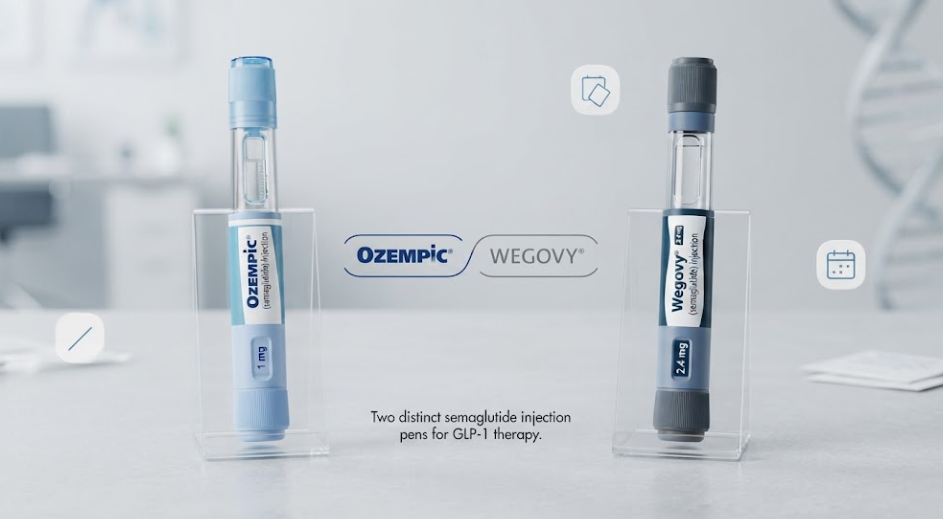
Ozempic contains semaglutide, the same active ingredient found in Wegovy. However, Ozempic is primarily approved for the treatment of type 2 diabetes and certain cardiovascular risk-related indications.
That does not mean Ozempic and Wegovy are completely different medications. They contain the same active ingredient but have different approved uses, doses, and labeling. People sometimes refer to Ozempic as a “weight loss drug” because significant weight loss can occur in people taking semaglutide.
However, using a medication for an indication different from its FDA-approved labeling is something patients should discuss with their healthcare professional.
Ozempic vs Wegovy
One of the most common questions is: What is the difference between Ozempic and Wegovy?
Both contain semaglutide. The major difference is the FDA-approved indication and dosing framework.
| Feature | Ozempic | Wegovy |
| Ingredient | Semaglutide | Semaglutide |
| Primary FDA-approved use | Type 2 diabetes | Chronic weight management |
| Form | Injection | Injection and tablet under current labeling |
| Weight loss | Can occur | Primary treatment goal |
| Same ingredient? | Yes | Yes |
Wegovy also has an FDA-approved indication for reducing the risk of certain serious cardiovascular events in adults with established cardiovascular disease and obesity or overweight.
Mounjaro vs Zepbound
Mounjaro and Zepbound are another pair that frequently confuses. Both contain tirzepatide.
Mounjaro is primarily associated with type 2 diabetes treatment. Zepbound is the tirzepatide brand approved for chronic weight management and, separately, certain adults with obesity and obstructive sleep apnea.
The active ingredient is the same, but the FDA-approved indications and labeling differ.
How Much Weight Can You Lose With GLP-1 Medications?
This is probably the single most searched question about GLP-1 treatment. The honest answer is: It depends. Some people lose relatively little weight. Others lose 10%, 15%, 20%, or more of their starting body weight.
Clinical-trial averages can be useful for understanding what is possible, but they should never be interpreted as a guarantee for an individual.
For example, trials of higher-dose tirzepatide have demonstrated average weight reductions approaching or exceeding 20% in some populations.
That is a major amount of weight.
Someone weighing 250 pounds who loses:
- 5% = 12.5 pounds
- 10% = 25 pounds
- 15% = 37.5 pounds
- 20% = 50 pounds
- 25% = 62.5 pounds
Someone weighing 300 pounds who loses:
- 5% = 15 pounds
- 10% = 30 pounds
- 15% = 45 pounds
- 20% = 60 pounds
- 25% = 75 pounds
These percentages demonstrate why even a seemingly modest percentage reduction can produce a meaningful change in body weight.
What Is Considered Successful Weight Loss?
A 5% reduction in body weight is often clinically meaningful.
For a 240-pound person, 5% represents 12 pounds.
A 10% reduction represents 24 pounds.
A 15% reduction represents 36 pounds.
A 20% reduction represents 48 pounds.
The goal should not simply be the largest possible number on the scale.
Doctors may consider improvements in blood pressure, blood sugar, cholesterol, mobility, sleep apnea, joint stress, cardiovascular risk, and overall health when evaluating whether treatment is successful.
How Quickly Do GLP-1 Medications Cause Weight Loss?
Weight loss usually does not happen all at once.
Most medications are started at a lower dose and gradually increased.
The early doses are often intended to help the body adjust to the medication. Some people notice appetite changes relatively quickly. Others may see little change during the first several weeks.
Weight loss may become more noticeable as the dose is gradually increased. There can also be periods where weight loss slows or temporarily stops. That does not necessarily mean the medication has stopped working.
GLP-1 Dosing: Daily vs Weekly
One major difference between GLP-1 medications is how frequently they are administered.
Daily medications
Liraglutide products such as Saxenda are administered daily. Some oral semaglutide products are also taken daily.
Weekly medications
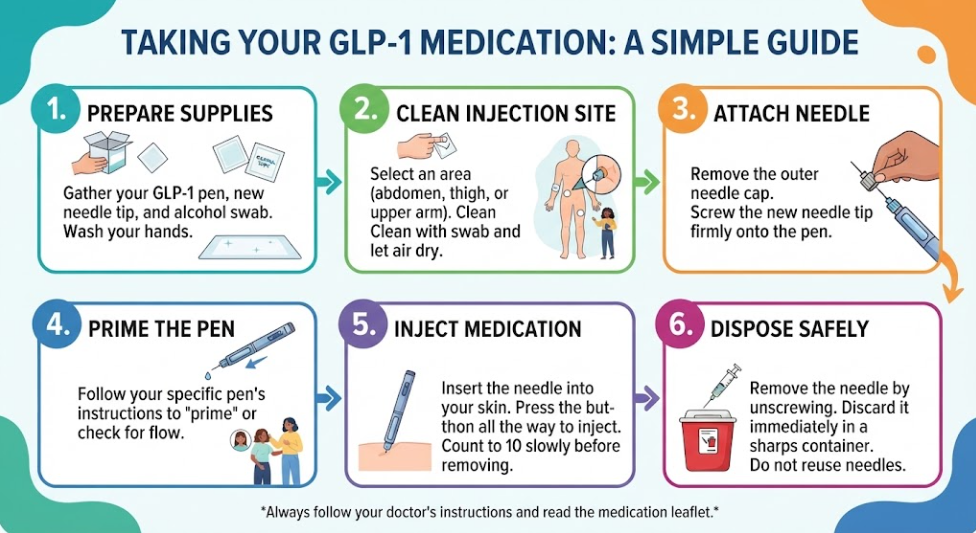
Wegovy injection and Zepbound injection are administered once weekly. Weekly dosing is one reason these medications have become convenient for many patients. The exact dosing schedule depends on the medication and the patient’s medical circumstances. Patients should follow the prescribed schedule rather than changing doses themselves.
Wegovy Dosing
Wegovy injection is generally started at a low dose and increased gradually. The FDA labeling describes an initial 0.25 mg once-weekly injection, followed by dose increases at intervals designed to improve tolerability.
Maintenance dosing can reach 2.4 mg once weekly for the appropriate indication, although labeling includes circumstances in which another maintenance dose may be used.
The purpose of gradually increasing the dose is not simply to accelerate weight loss. It is also intended to help the body adapt and potentially reduce gastrointestinal problems.
Zepbound Dosing
Zepbound is also started at a low dose and gradually increased. The 2.5 mg dose is a starting dose, not a maintenance dose.
Depending on response and tolerability, the medication may be increased through progressively higher doses.
The maximum maintenance dose is 15 mg once weekly. The appropriate dose is determined by the prescribing clinician.
Why Don’t Doctors Start With the Highest Dose?
Starting at the maximum dose may increase the likelihood of side effects. Gradual titration gives the body time to adjust. This is particularly important with medications that can cause gastrointestinal symptoms.
Patients should not assume that taking a higher dose automatically produces better results. A dose that produces meaningful weight loss while remaining tolerable may be preferable to a dose that causes severe side effects.
Common GLP-1 Side Effects
Gastrointestinal side effects are among the most commonly reported problems.
These can include:
- Nausea
- Vomiting
- Diarrhea
- Constipation
- Abdominal pain
- Bloating
- Indigestion
- Feeling excessively full
- Burping
- Reduced appetite
Not everyone experiences these effects.
Some people experience very mild symptoms.
Others may have more significant problems, particularly when increasing the dose.
Why Does GLP-1 Medication Cause Nausea?
Several mechanisms may contribute. GLP-1 medications can slow gastric emptying and affect appetite and satiety pathways.
Eating a large, heavy, high-fat meal after starting treatment may be particularly uncomfortable for some people. This is one reason many patients find that smaller meals are easier to tolerate.
Tips Often Used to Reduce GI Problems
A healthcare professional may recommend strategies such as:
- Eating smaller meals
- Eating more slowly
- Avoiding very large portions
- Staying adequately hydrated
- Limiting foods that consistently trigger symptoms
- Avoiding excessive alcohol
- Following the prescribed dose-escalation schedule
Persistent vomiting, severe abdominal pain, signs of dehydration, or other concerning symptoms should be discussed promptly with a healthcare professional.
Serious Side Effects and Safety Warnings
GLP-1 medications are powerful prescription drugs and are not appropriate for everyone.
Important warnings and precautions can include:
- Pancreatitis
- Gallbladder disease
- Severe gastrointestinal reactions
- Dehydration and kidney problems associated with severe GI symptoms
- Hypoglycemia when used with certain other diabetes medications
- Allergic reactions
- Delayed gastric emptying
- Certain thyroid-related risks
The specific warnings differ between products.
Patients should read the prescribing information for their specific medication and discuss personal risk factors with their healthcare provider.
The Thyroid Cancer Warning
Semaglutide and tirzepatide products carry important warnings regarding thyroid C-cell tumors based on findings in rodents.
For example, the prescribing information for Wegovy includes a boxed warning regarding thyroid C-cell tumors and states that the medication is contraindicated in people with a personal or family history of medullary thyroid carcinoma or in people with MEN 2.
This is one of the reasons medical screening before treatment matters.
GLP-1 Medications and Pancreatitis
Pancreatitis is inflammation of the pancreas and is a serious medical condition. Symptoms can include severe abdominal pain, sometimes radiating to the back, and may be accompanied by vomiting.
Anyone experiencing severe or persistent abdominal pain while taking a GLP-1 medication should seek medical evaluation rather than assuming the symptoms are simply a normal medication side effect.
Gallbladder Problems
Rapid weight loss itself can increase the risk of certain gallbladder problems, and gallbladder-related adverse reactions have also been reported with GLP-1-based medications.
Potential symptoms can include upper abdominal pain, nausea, vomiting, fever, or jaundice. These symptoms warrant medical attention.
Can GLP-1 Medications Cause Low Blood Sugar?
GLP-1 medications generally have a lower risk of hypoglycemia when used alone than some older diabetes medications.
However, the risk can increase when they are combined with medications such as insulin or certain insulin-secretagogue drugs.
People with diabetes should follow their clinician’s instructions for monitoring blood glucose and adjusting other medications.
Who Can Take GLP-1 Weight Loss Medications?
Prescription weight-management medications are generally considered for people who meet specific medical criteria.
NIDDK explains that prescription medications may be considered for adults with a BMI of 30 or greater, or a BMI of 27 or greater with weight-related health problems, depending on the medication and clinical circumstances.
BMI is only one part of the medical assessment.
A clinician may also consider:
- Blood pressure
- Blood sugar
- Cholesterol
- Sleep apnea
- Cardiovascular disease
- Other medical conditions
- Current medications
- Previous weight-loss attempts
- Family history
- Pregnancy status
- Eating patterns
- Personal treatment goals
Can Someone Without Diabetes Take a GLP-1 Medication?
Yes – diabetes is not required for every FDA-approved obesity medication. Wegovy and Zepbound are examples of medications specifically approved for weight management in appropriate people who may or may not have diabetes.
The distinction between diabetes treatment and obesity treatment is important. A person should not assume that having no diabetes means they cannot receive a GLP-1-based weight-loss medication.
Can People With Type 2 Diabetes Take GLP-1 Medications?
Yes – several medications in this category were developed specifically for type 2 diabetes.
For people with type 2 diabetes and overweight or obesity, weight loss can also contribute to improved metabolic health.
NIDDK notes that weight-management medications can help some people with type 2 diabetes and overweight or obesity manage their weight, while emphasizing that medication should be part of an individualized treatment approach.
GLP-1 Medications and Pregnancy
Weight-loss medications are generally not intended to be used for weight reduction during pregnancy. Pregnancy changes the medical priorities around nutrition and weight.
Anyone who is pregnant, planning pregnancy, or breastfeeding should discuss medication use with an appropriate healthcare professional before starting, stopping, or changing treatment.
Do not use a weight-loss medication simply because someone online says it is safe during pregnancy.
What Happens When You Stop a GLP-1 Medication?
This is one of the most important questions that gets overlooked. GLP-1 medications do not necessarily permanently eliminate the biological factors that contributed to obesity.
When treatment stops, appetite may increase again. The feeling of fullness may change. Food cravings may return. Calorie intake can increase. As a result, some people regain some or much of the weight they lost.
NIDDK specifically notes that people may regain some weight after stopping prescription weight-loss medication. This is why obesity is increasingly understood as a chronic condition that may require long-term management rather than a short-term diet challenge.
Are GLP-1 Medications a Lifelong Treatment?
There is no universal answer. Some people may use them for a limited period. Others may require long-term treatment. The appropriate duration depends on the individual’s health, response, side effects, goals, insurance situation, and medical advice.
A person who loses weight successfully should not automatically assume that stopping treatment is the best next step. Similarly, no one should assume they must remain on medication forever. The decision belongs to the patient and healthcare professional.
What Happens If You Miss a GLP-1 Dose?
The instructions differ depending on the specific medication. Patients should not guess. The prescribing information for the medication should be followed, or the patient should contact the prescribing clinician or pharmacist. Do not automatically double the next dose because you missed a previous dose.
Can You Take Two GLP-1 Medications Together?
Generally, patients should not combine GLP-1-containing medications unless specifically directed by a qualified clinician. For example, the FDA prescribing information for Wegovy states that it should not be used with other semaglutide-containing products or other GLP-1 receptor agonist medicines.
More medication does not necessarily mean more weight loss. It can mean more adverse effects and unnecessary risk.
Semaglutide vs Tirzepatide
The comparison between semaglutide and tirzepatide has become one of the biggest topics in weight management.
Semaglutide
Semaglutide is the active ingredient in:
- Wegovy
- Ozempic
- Rybelsus
Its primary mechanism is GLP-1 receptor activation.
Tirzepatide
Tirzepatide is the active ingredient in:
- Zepbound
- Mounjaro
It activates both GIP and GLP-1 receptors.
Which Produces More Weight Loss?
Clinical trials have demonstrated substantial weight loss with both medications. Some head-to-head research has shown greater average weight loss with tirzepatide than semaglutide in certain populations.
However, “best” is not necessarily the same for every person. Cost, insurance coverage, side effects, medical history, dosing preferences, availability, and response all matter.
Wegovy vs Zepbound
For people specifically interested in weight loss, Wegovy and Zepbound are two of the most important medications to compare.
| Category | Wegovy | Zepbound |
| Ingredient | Semaglutide | Tirzepatide |
| Main mechanism | GLP-1 | GIP + GLP-1 |
| Injection frequency | Weekly | Weekly |
| Weight management | Yes | Yes |
| Type 2 diabetes brand | Ozempic | Mounjaro |
| OSA indication | Not the same indication | Yes, in adults with obesity |
| Starting injection dose | 0.25 mg | 2.5 mg |
| Maximum weekly dose | 2.4 mg for standard maintenance | 15 mg |
The milligram numbers should not be compared directly.
A 15 mg dose of tirzepatide is not “stronger” simply because 15 is larger than 2.4. They are different molecules measured in different dosing systems.
How Much Does Wegovy Cost Without Insurance?
The answer changes over time because manufacturer savings programs and self-pay programs can change.
As of the current 2026 manufacturer information, NovoCare lists self-pay pricing for Wegovy that varies by dose and formulation. For example, the current program lists introductory pricing of $199 per month for certain early injection doses, followed by standard self-pay pricing, subject to program terms and eligibility.
Wegovy’s manufacturer also advertises savings programs for eligible patients with commercial insurance.
Because manufacturer pricing can change, patients should verify the current price directly before filling a prescription.
How Much Does Zepbound Cost Without Insurance?
Zepbound also has manufacturer self-pay programs.
Current Lilly information lists self-pay pricing beginning at approximately $299 per month for the 2.5 mg starting dose, with higher doses priced differently.
For certain higher doses, the current Zepbound Self Pay Journey Program lists $449 per month for 7.5 mg, 10 mg, 12.5 mg, and 15 mg when program requirements are met.
Terms, eligibility requirements, pharmacy arrangements, taxes, and fees can apply.
Always verify the current manufacturer pricing before making a financial decision.
GLP-1 Cost Without Insurance
The total cost of GLP-1 treatment can include more than the medication itself.
Potential costs include:
- Doctor consultation
- Telehealth consultation
- Laboratory testing
- Medication
- Pharmacy fees
- Injection supplies
- Follow-up appointments
- Prior authorization services
- Additional medical monitoring
Some online clinics advertise a monthly membership price that includes some services but not the medication. Others advertise the medication price separately.
Consumers should determine exactly what is included before paying.
Does Insurance Cover GLP-1 Medications?
Sometimes, as insurance coverage and plans vary enormously.
A health insurance plan may:
- Cover the medication fully
- Cover it after a deductible
- Require prior authorization
- Require documentation of BMI or medical conditions
- Require previous weight-loss attempts
- Require another medication first
- Cover diabetes indications but exclude obesity treatment
- Exclude weight-loss medications entirely
Having health insurance does not automatically mean that a weight-loss GLP-1 medication will be covered.
Why Does Insurance Deny GLP-1 Weight Loss Drugs?
One common reason is that the insurance plan excludes medications used primarily for weight management. Another possibility is that the medication is covered only for a specific diagnosis.
Some plans may cover Ozempic for type 2 diabetes but not cover Wegovy for obesity. That does not necessarily mean the drugs are medically unrelated. It means the insurance plan has different coverage rules for different FDA-approved indications. Patients should check the formulary and speak with the insurance company.
Prior Authorization for GLP-1 Medications
Prior authorization means the insurance company wants additional information before agreeing to pay.
The insurer may request documentation such as:
- BMI
- Diagnosis
- Existing medical conditions
- Previous treatment attempts
- Medication history
- Laboratory results
- Evidence that the patient meets plan criteria
Approval is not guaranteed.
Medicare and GLP-1 Weight Loss Coverage
Medicare coverage can be particularly complicated because coverage rules depend on the medication, indication, benefit structure, and current federal programs. There are also newer manufacturer programs that may change access.
For example, Lilly currently describes a Medicare GLP-1 Bridge beginning July 1, 2026, for eligible Medicare beneficiaries seeking Zepbound for weight management, with a stated cost of no more than $50 per month for qualifying participants under the program terms.
Novo Nordisk also has current programs and eligibility requirements that can affect access to Wegovy. Patients should verify their eligibility rather than assuming that Medicare automatically covers or excludes a particular GLP-1 medication.
Where Can You Buy GLP-1 Medications?
FDA-approved GLP-1 medications are prescription drugs.
Potential legitimate sources include:
- Traditional retail pharmacies
- Mail-order pharmacies
- Manufacturer-affiliated pharmacy services
- Legitimate telehealth providers
- Healthcare systems
- Specialty pharmacies when appropriate
A prescription should come from a qualified healthcare professional following an appropriate evaluation.
Can You Get GLP-1 Medications Online?
Yes, you sure can. Telehealth has become a major source of access to obesity treatment.
A legitimate online service may allow a patient to:
- Complete a medical intake
- Speak with a licensed clinician
- Provide relevant medical information
- Receive laboratory orders when appropriate
- Obtain a prescription if medically appropriate
- Have the prescription sent to a pharmacy
However, not every website selling or advertising GLP-1 products is legitimate.
Consumers should be cautious about websites that make extraordinary promises, sell prescription drugs without appropriate medical oversight, or provide unclear information about the actual source of the medication.
How to Spot a Suspicious GLP-1 Website
Be cautious when a website:
- Promises guaranteed weight loss
- Claims everyone will lose a specific number of pounds
- Says a product has no side effects
- Sells prescription medication without a legitimate prescription process
- Uses questionable celebrity endorsements
- Does not clearly identify the pharmacy
- Uses vague claims about FDA approval
- Offers unusually cheap injectable medication without explaining the source
- Uses confusing dosing instructions
- Cannot explain exactly what medication is being provided
FDA has specifically warned about fraudulent compounded semaglutide and tirzepatide products being marketed in the United States with false labeling information.
What Is Compounded Semaglutide?
Compounded semaglutide is not the same thing as an FDA-approved brand-name product simply because it contains semaglutide.
Compounded medications can serve legitimate medical purposes in appropriate circumstances, but they are not FDA-approved in the same way commercial products such as Wegovy are.
FDA has also expressed concerns regarding unapproved compounded GLP-1 products, including dosing errors and fraudulent products.
Consumers should understand exactly what they are receiving.
What Is Compounded Tirzepatide?
The same general principle applies to compounded tirzepatide. Zepbound and Mounjaro are FDA-approved branded tirzepatide products. A compounded tirzepatide product is a different regulatory category.
Consumers should not assume that a compounded product has undergone the same FDA premarket review for safety, effectiveness, quality, manufacturing, and labeling as an FDA-approved commercial product.
Is Compounded Semaglutide Safe?
That question cannot be answered with a simple yes or no for every compounded product. The quality of a compounded medication depends on the circumstances, pharmacy, formulation, ingredients, handling, dosing, and regulatory compliance.
FDA has reported dosing errors associated with compounded semaglutide, including problems caused by confusion between milligrams, milliliters, and syringe “units.”
FDA has also warned about fraudulent compounded products. Anyone considering a compounded medication should discuss the specific product and pharmacy with a qualified healthcare professional.
Why Are People Confused About GLP-1 “Units”?
This is particularly important with compounded injections. Branded products typically provide precise instructions based on the product’s labeled concentration and delivery device.
Compounded products may come in different concentrations. One person’s “20 units” may contain a very different amount of medication from another person’s “20 units.”
Therefore, patients should never compare syringe units between products without knowing the concentration.
Confusing units, milliliters, and milligrams can result in serious dosing errors.
GLP-1 Diet: What Should You Eat?
There is no single official “GLP-1 diet.” However, many people find that certain eating patterns are easier to tolerate while taking appetite-reducing medications.
A balanced diet can emphasize:
- Lean protein
- Vegetables
- Fruits
- Whole grains
- Beans
- Healthy fats
- Adequate fluids
Protein can be particularly important during weight loss because preserving lean mass matters. Large, greasy meals may be difficult for some people to tolerate. Very sugary foods may also become less appealing. The goal should generally be sustainable nutrition rather than an extreme crash diet.
Protein and GLP-1 Weight Loss
Rapid weight loss can involve both fat mass and lean mass. That makes resistance training and adequate protein particularly important topics to discuss with a healthcare professional or registered dietitian.
A person losing weight should not focus exclusively on the number on the scale. Preserving muscle and maintaining adequate nutrition are important components of healthy weight management.
Should You Exercise While Taking a GLP-1?
Unless medically contraindicated, physical activity is an important part of long-term weight management.
Exercise can help:
- Preserve muscle
- Improve fitness
- Support cardiovascular health
- Improve insulin sensitivity
- Improve mobility
- Increase energy expenditure
- Support weight maintenance
Strength training can be especially useful during weight loss because it provides a stimulus for maintaining muscle.
Can GLP-1 Medications Reduce Food Cravings?
Many people report substantially less interest in food while taking these medications. Some describe it as a reduction in “food noise.” The scientific explanation involves effects on appetite-regulating systems rather than simply a lack of willpower.
For some people, this reduction in hunger makes it dramatically easier to maintain healthier eating habits.
Why Do Some People Not Lose Weight on GLP-1 Medication?
Not everyone responds equally. Possible factors include:
- Medication dose
- Treatment duration
- Adherence
- Underlying medical conditions
- Other medications
- Diet
- Physical activity
- Sleep
- Genetics
- Individual biology
- Whether the person has reached an effective maintenance dose
- Whether the medication is being used appropriately
Early in treatment, lack of substantial weight loss may not mean treatment has failed.
Doctors generally evaluate progress over time rather than judging the medication after only a few injections.
What If Weight Loss Stops?
Weight loss commonly slows over time. The body changes as weight decreases. Energy requirements can decline. Appetite may gradually increase.
Physical activity can also change. A plateau does not necessarily mean that the medication has stopped working. A clinician may evaluate:
- Current dose
- Treatment duration
- Food intake
- Protein intake
- Exercise
- Sleep
- Other medications
- Medical conditions
- Whether another treatment approach is appropriate
Never increase the medication dose independently.
Can You Drink Alcohol While Taking GLP-1 Medication?
Alcohol is not automatically prohibited for every person taking a GLP-1 medication, but it deserves caution. Alcohol can contribute calories, affect blood sugar, worsen dehydration, and aggravate gastrointestinal symptoms in some people.
People with diabetes may have additional considerations. Anyone with a history of pancreatitis or other relevant medical conditions should specifically discuss alcohol use with their clinician.
GLP-1 Medications and Sleep Apnea
Obesity and obstructive sleep apnea frequently occur together. Zepbound is now FDA-approved for moderate-to-severe obstructive sleep apnea in adults with obesity, in combination with a reduced-calorie diet and increased physical activity.
This represents an important expansion of the role of obesity medications beyond simply reducing the number on a scale.
GLP-1 Medications and Heart Health
Some GLP-1-based medications have demonstrated cardiovascular benefits in specific populations. Wegovy received FDA approval in 2024 to reduce the risk of cardiovascular death, heart attack, and stroke in adults with established cardiovascular disease and obesity or overweight.
That does not mean every person taking a GLP-1 medication receives the same cardiovascular benefit. The indication and evidence depend on the specific medication and patient population.
GLP-1 Medications and Type 2 Diabetes
GLP-1-based medications have become an important part of diabetes treatment. They can improve glucose control while also helping some patients lose weight. Tirzepatide has also become an important diabetes medication under the Mounjaro brand.
The diabetes and obesity markets increasingly overlap because excess weight and type 2 diabetes are closely connected.
Are GLP-1 Medications Safe Long Term?
Long-term safety is an important question because obesity treatment may last for years. Many of these medications have substantial clinical experience behind them, but no medication is risk-free. The appropriate question is not simply: “Are GLP-1 medications safe?”
It is: “Are the potential benefits and risks appropriate for this particular person?” That requires consideration of medical history, other medications, kidney function, gastrointestinal conditions, pregnancy status, family history, and other factors.
Who Should Not Take Certain GLP-1 Medications?
Contraindications vary by medication. For example, Wegovy’s labeling includes a contraindication for individuals with a personal or family history of medullary thyroid carcinoma or MEN 2.
There may also be important precautions involving severe gastrointestinal disease, a history of pancreatitis, gallbladder disease, medications that affect blood sugar, pregnancy, and allergic reactions.
This is why online self-diagnosis is not a substitute for medical evaluation.
What Questions Should You Ask Before Starting a GLP-1?
A patient considering treatment may want to ask:
- Am I medically eligible for this medication?
- Which medication is being recommended and why?
- What dose will I start with?
- How will the dose increase?
- What side effects should I expect?
- Which symptoms require immediate medical attention?
- How much weight loss is realistic for me?
- What happens if I stop taking it?
- How long might I need treatment?
- Will my insurance cover it?
- What will my actual monthly cost be?
- Are there lower-cost legitimate options?
- What should I eat while taking it?
- Should I increase protein?
- Should I perform resistance training?
- What happens if I miss a dose?
- What other medications could interact with it?
- Is a compounded medication appropriate in my circumstances?
GLP-1 Medications: Major Brands at a Glance
| Brand | Ingredient | Typical primary role |
| Wegovy | Semaglutide | Weight management |
| Ozempic | Semaglutide | Type 2 diabetes |
| Rybelsus | Semaglutide | Type 2 diabetes |
| Zepbound | Tirzepatide | Weight management / OSA in appropriate adults |
| Mounjaro | Tirzepatide | Type 2 diabetes |
| Saxenda | Liraglutide | Weight management |
| Victoza | Liraglutide | Type 2 diabetes |
| Trulicity | Dulaglutide | Type 2 diabetes |
The approved indications can change over time, so patients should verify the current FDA labeling for the medication they are considering.
Which Is the Best GLP-1 for Weight Loss?
There is no universally best medication. If a person asks, “What is the strongest GLP-1?” that is an oversimplification. The better question is:
“Which evidence-based medication has the best balance of effectiveness, safety, affordability, convenience, and suitability for this individual?”
For some people, tirzepatide may produce more weight loss. For others, semaglutide may be the preferred choice. Some patients may have better insurance coverage for one medication.
Others may experience fewer side effects with one option. A medication that someone can afford and tolerate is often more useful than a medication that looks ideal on paper but is inaccessible.
GLP-1 Cost Comparison
Prices change frequently, so the following should be viewed as a general guide rather than a permanent price list.
Wegovy
Manufacturer self-pay programs currently advertise pricing that varies by dose and formulation. Current NovoCare information includes introductory and ongoing self-pay prices, with eligibility restrictions.
Zepbound
Lilly currently advertises self-pay programs beginning around $299 per month for the 2.5 mg starting dose, with higher doses priced differently. Certain 7.5 mg through 15 mg doses are listed at $449 per month under the current Self Pay Journey Program when program requirements are met.
Because pricing programs can change, check the manufacturer’s current information before publishing or relying on a specific price.
Why Manufacturer Prices Matter
GLP-1 pricing is unusual because the amount a patient pays can vary dramatically depending on:
- Insurance
- Deductible
- Prior authorization
- Manufacturer savings
- Pharmacy
- Dose
- Self-pay status
- Eligibility for assistance programs
- Medicare or Medicaid status
Two people receiving the same medication can therefore pay completely different amounts.
Patient Assistance Programs
Some manufacturers operate assistance programs for qualifying patients. Novo Nordisk, for example, operates a Patient Assistance Program through NovoCare under which eligible patients may qualify to receive certain medicines at no cost. Eligibility restrictions apply.
Patients should investigate official manufacturer programs before paying full retail prices.
The Future of GLP-1 Medications
The GLP-1 market is continuing to evolve rapidly. Researchers and pharmaceutical companies are investigating:
- New oral medications
- Higher-dose formulations
- Longer-acting medications
- Combination hormone therapies
- New obesity medications
- Treatments for metabolic diseases
- Treatments for cardiovascular disease
- Treatments for liver disease
- Treatments for sleep apnea
- Combination approaches
The emergence of oral semaglutide for weight management is particularly significant because it offers an alternative to injectable treatment under current Wegovy labeling.
Oral GLP-1 Medications vs Injections
Some patients strongly prefer pills because they dislike injections. Others prefer weekly injections because they are simpler than remembering a daily medication. Oral medications also have their own administration requirements.
Therefore, the “best” route is partly a matter of medical suitability and personal preference.
Can GLP-1 Medications Replace Diet and Exercise?
No, it does not. The medications are intended to be used as part of a broader treatment strategy. FDA-approved obesity indications commonly specify use alongside a reduced-calorie diet and increased physical activity.
However, that does not mean a person needs to achieve perfect diet and exercise habits before medication can work. One advantage of effective obesity medication is that reducing appetite can make healthy eating and activity easier to maintain.
Are GLP-1 Medications a “Magic Pill”?
No, it’s not some magic pill. They can be extraordinarily effective, but they are not magic. They do not eliminate the need for medical supervision. They do not guarantee a specific amount of weight loss.
They do not prevent every side effect. They do not permanently change every biological factor contributing to obesity. And they are not appropriate for everyone.
What they can do is provide a powerful biological tool that can make sustained weight management easier for many appropriate patients.
GLP-1 Frequently Asked Questions
How long does it take for a GLP-1 to start working?
Some people notice appetite changes within days or weeks, while significant weight loss generally develops over a longer period. Early doses are often intentionally low, so the full effect may not be apparent immediately.
Can you lose 20% of your body weight with a GLP-1?
Some clinical trials have demonstrated average weight reductions around or above 20% with certain medications and doses. Individual results vary considerably.
Which is better, Wegovy or Zepbound?
Both can produce substantial weight loss. Tirzepatide has demonstrated greater average weight loss than semaglutide in some comparative research, but the best option depends on the individual.
Is Ozempic the same as Wegovy?
Both contain semaglutide, but they are different branded products with different FDA-approved indications and dosing frameworks.
Is Mounjaro the same as Zepbound?
Both contain tirzepatide, but they are marketed for different primary FDA-approved indications.
Can you take a GLP-1 if you don’t have diabetes?
Yes. Certain GLP-1-based medications and tirzepatide products are specifically approved for weight management in people with obesity or appropriate overweight-related medical conditions, regardless of whether they have diabetes.
Do GLP-1 medications suppress appetite?
Yes. Appetite reduction and increased satiety are important effects of these medications.
Can GLP-1 medications cause constipation?
Yes. Constipation is among the gastrointestinal side effects that can occur.
Can GLP-1 medications cause diarrhea?
Yes. Diarrhea can occur, particularly during treatment or dose escalation.
Can GLP-1 medications cause nausea?
Yes. Nausea is one of the most commonly discussed gastrointestinal side effects.
Can you drink alcohol while taking a GLP-1?
Alcohol may worsen gastrointestinal symptoms, contribute to calorie intake, and create other risks depending on the individual’s medical condition and other medications. Discuss alcohol use with a healthcare professional.
Can GLP-1 medications cause muscle loss?
Weight loss can involve both fat and lean mass. Maintaining adequate nutrition and performing resistance exercise can be important strategies for preserving muscle during weight loss.
Do you regain weight after stopping a GLP-1?
Some people regain weight after stopping. Appetite and calorie intake can increase after treatment ends, which is why long-term weight management planning matters.
Are compounded GLP-1 medications FDA approved?
Compounded products are not FDA-approved in the same way branded medications are. FDA has issued multiple warnings concerning unapproved and fraudulent compounded GLP-1 products.
Are online GLP-1 clinics legitimate?
Some telehealth services provide legitimate medical care and prescriptions. Others may not meet the same standards. Consumers should verify the provider, clinician, pharmacy, prescription process, and medication source.
Can I buy a GLP-1 without a prescription?
FDA-approved GLP-1 medications are prescription medications. A legitimate prescription should be obtained through an appropriate healthcare professional.
What happens if I take too much?
Taking too much medication can cause serious adverse effects, particularly severe gastrointestinal symptoms and dehydration. If you believe you have taken an excessive dose, contact a healthcare professional or poison-control resource promptly.
Can I switch from semaglutide to tirzepatide?
Switching medications may be medically appropriate for some people, but the transition should be planned by a healthcare professional. Do not take both simultaneously unless specifically instructed.
Does insurance cover Wegovy?
Some plans do, and some do not. Coverage depends on the specific insurance policy, indication, formulary, prior authorization requirements, and other criteria.
Does insurance cover Zepbound?
Some plans cover it, and others exclude weight-management medications. Lilly provides an online coverage resource, but patients should confirm benefits directly with their insurance provider.
How much does Wegovy cost without insurance?
Current manufacturer self-pay pricing varies by dose and formulation. NovoCare currently lists different prices for different doses and programs.
How much does Zepbound cost without insurance?
Current Lilly self-pay programs begin at approximately $299 per month for the 2.5 mg starting dose, with higher doses costing more under the applicable program.
Is Zepbound a GLP-1?
Technically, Zepbound is a dual GIP/GLP-1 receptor agonist rather than a traditional GLP-1-only medication.
Is tirzepatide stronger than semaglutide?
Tirzepatide has produced greater average weight loss than semaglutide in some studies, but “stronger” is not a precise medical measurement and individual response varies.
What is the strongest weight-loss medication?
There is no single medication that is universally strongest or best for everyone. Clinical trial averages suggest some medications produce greater average weight reduction than others, but individual response, safety, and access matter.
Can GLP-1 medications cure obesity?
They are treatments for obesity rather than a permanent cure. Obesity can be a chronic disease requiring ongoing management.
Do GLP-1 medications work forever?
The medications can remain effective over long periods, but the amount of weight loss may plateau, and ongoing treatment decisions should be reassessed periodically.
A Practical GLP-1 Treatment Checklist
Before starting treatment, consider these questions:
Medical eligibility
- Do I meet the medical criteria?
- Do I have conditions that affect which medication is appropriate?
- Am I taking other medications that could interact?
Medication
- Which active ingredient am I receiving?
- What is the FDA-approved indication?
- What dose will I start with?
- How will the dose increase?
Safety
- What side effects should I expect?
- What symptoms require urgent attention?
- Are there contraindications relevant to me?
Cost
- Does insurance cover it?
- What is my deductible?
- Is prior authorization required?
- What will I pay after the introductory period?
- Are manufacturer savings programs available?
Lifestyle
- What should I eat?
- How much protein should I consume?
- Should I perform strength training?
- How much physical activity is appropriate?
Long term
- How long might I need treatment?
- What happens if I stop?
- How will we handle a weight-loss plateau?
- What is the plan if the medication does not work well enough?
The Bottom Line about Weight Loss With GLP-1 Meds
GLP-1 medications have fundamentally changed the weight-loss landscape. Semaglutide-based medications such as Wegovy and tirzepatide-based medications such as Zepbound can produce substantial weight loss in appropriately selected patients.
The medications work largely by influencing appetite, satiety, digestion, and metabolic pathways. Tirzepatide has the additional distinction of activating both GIP and GLP-1 receptors.
For many people, the biggest benefit is not simply seeing a lower number on the scale. It may be finally being able to control hunger, reduce portions, decrease cravings, improve metabolic health, become more physically active, and sustain healthier eating patterns.
But these medications are not right for everyone. They have contraindications, warnings, side effects, costs, and insurance complications. Treatment also requires a realistic understanding that obesity can be a chronic condition and that stopping medication may result in weight regain for some people.
The most important step is choosing a legitimate medication and obtaining it through an appropriate medical and pharmacy process. Consumers should be especially cautious about websites selling suspicious compounded products or making guaranteed weight-loss claims. FDA has warned about fraudulent compounded GLP-1 products and other safety concerns surrounding unapproved products.
If you are considering a GLP-1 medication, talk with a qualified healthcare professional about your medical history, current medications, weight-management goals, expected benefits, potential risks, and total treatment cost.
__________________________
Medical Disclaimer
This article is intended for general educational and informational purposes only. It is not intended to diagnose, treat, cure, or prevent any disease and does not constitute medical advice. GLP-1 medications and other prescription weight-management drugs should only be used under the supervision of a qualified healthcare professional. Medication indications, dosing, warnings, insurance coverage, availability, and pricing can change. Always consult your doctor, pharmacist, or other qualified healthcare professional for advice about your individual circumstances and verify current prescribing information before starting or changing medication.
Important: This article is for general educational purposes and is not medical advice. GLP-1 medications are prescription drugs and should be used under the guidance of a qualified healthcare professional.
SOURCES
Di Odoardo, L. A. F., et al. (2026). GLP-1 receptor agonists for weight loss: A systematic review and meta-analysis. Medicine (Baltimore), 105(11). https://pubmed.ncbi.nlm.nih.gov/41824845/
Mamas, M. A., et al. (2026). Heterogeneity of Treatment Effects of Glucagon-Like Peptide-1 Receptor Agonists. PubMed / Systematic Review Data, 41770554. https://pubmed.ncbi.nlm.nih.gov/41770554/
European Journal of Heart Failure. (2026). Semaglutide vs tirzepatide in patients with obesity and HFpEF: A real-world observational cohort study. European Journal of Heart Failure, 13(1), xvag042. https://academic.oup.com/eschf/article/13/1/xvag042/8444515
Jastreboff, A. M., et al. (2025). Tirzepatide as Compared with Semaglutide for the Treatment of Obesity (SURMOUNT-5 Trial). The New England Journal of Medicine. https://www.nejm.org/doi/full/10.1056/NEJMoa2416394
Addictive Behaviors Reports. (2026). Glucagon-like peptide 1 receptor agonists in substance use disorders: A systematic review of ClinicalTrials.Gov. Addict Behav Rep, 23, 100671. https://pubmed.ncbi.nlm.nih.gov/41696398/
Leave a Reply