
The explosion of glucagon-like peptide-1 (GLP-1) receptor agonists, such as semaglutide and tirzepatide, has fundamentally transformed modern medicine, shifting obesity management from a superficial dietary pursuit into a sophisticated biological science.
As millions of patients seek access to these powerful metabolic regulators, a critical healthcare division has emerged: Should you pursue treatment through a specialized medical endocrinologist or a dedicated commercial weight loss clinic?
Making this choice requires understanding the stark differences in clinical depth, insurance navigation, cost structures, and long-term metabolic support.
The Core Philosophies: Specialized Endocrinology vs. Streamlined Clinics
Understanding who should manage your GLP-1 therapy begins with examining how each care setting approaches the human body.
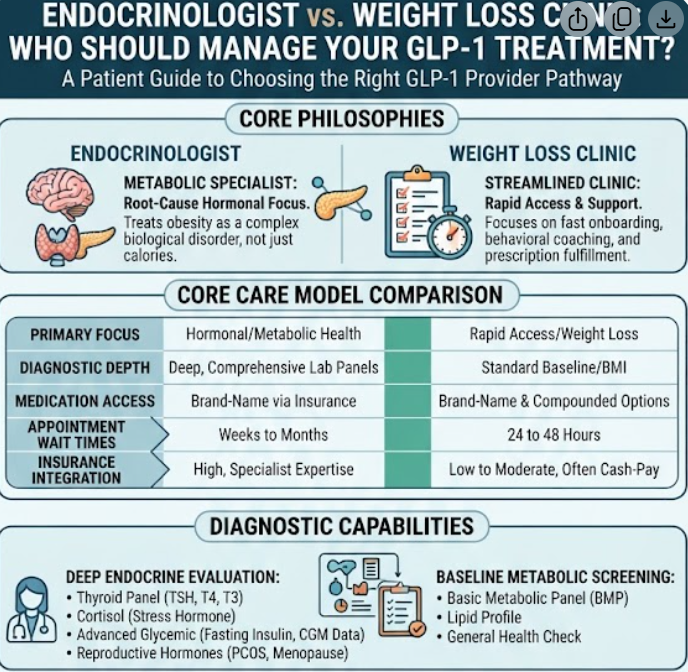
- The Endocrinologist Perspective: Endocrinology is rooted in the meticulous study of the endocrine system, hormones, and metabolic pathways. An endocrinologist approaches weight management as a complex hormonal disorder rather than a simple calorie-in, calorie-out equation. They evaluate how insulin, cortisol, thyroid hormones, and gut peptides interact, ensuring that underlying conditions like hypothyroidism, Cushing’s syndrome, or polycystic ovary syndrome (PCOS) are diagnosed and treated concurrently with GLP-1 therapy.
- The Weight Loss Clinic Perspective: Dedicated medical weight loss clinics—whether operating locally or through hybrid telehealth platforms—focus primarily on rapid access, behavioral modification, nutritional counseling, and streamlined prescription fulfillment. They excel at moving patients quickly through onboarding, securing initial medication supplies (including compounded alternatives when brand-name shortages occur), and providing structured, milestone-driven support.
Core Care Model Comparison
————————————————————————
Endocrinologist [Deep Diagnostic & Hormonal Focus]
Weight Loss Clinic [Rapid Access & Streamlined Support]
————————————————————————
Comprehensive Clinical and Operational Comparison
Evaluating the two pathways across key operational and medical metrics reveals distinct trade-offs for prospective patients.
| Evaluation Metric | Traditional Endocrinologist | Commercial Weight Loss Clinic |
| Primary Focus | Root-cause metabolic and hormonal disorders | Rapid prescription access and weight reduction |
| Diagnostic Depth | Comprehensive lab panels (thyroid, cortisol, insulin, etc.) | Standard metabolic baseline labs and BMI screening |
| Medication Access | Primarily brand-name (Wegovy, Ozempic, Zepbound) via insurance | Brand-name and 503A/503B compounded formulations |
| Appointment Wait Times | Often weeks to several months | Typically 24 to 48 hours |
| Insurance Integration | High (specialist copays, prior authorization expertise) | Low to moderate (many operate on cash-pay subscription models) |
Diagnostic Capabilities and Lab Work
A major differentiator between an endocrinologist and a standard weight loss clinic lies in the scope of diagnostic testing performed before and during GLP-1 administration.
When a patient struggles with stubborn weight retention, an endocrinologist digs deeper into biological roadblocks. Standard evaluations in an endocrinology practice frequently include:
- Thyroid Function Tests: Assessing TSH, Free T4, and T3 to rule out sluggish metabolism driven by hypothyroidism.
- Cortisol Assessments: Utilizing saliva or blood tests to evaluate potential hypercortisolemia or Cushing’s traits.
- Advanced Glycemic Profiling: Measuring fasting insulin, C-peptide, and continuous glucose monitoring (CGM) data to precisely map insulin resistance.
- Reproductive Hormone Panels: Checking testosterone, estrogen, and androgen ratios, particularly relevant for perimenopausal, menopausal, or PCOS-affected patients.
Weight loss clinics typically focus on baseline metabolic panels (such as a basic metabolic panel and lipid profile) to ensure safe physiological parameters for drug initiation, but rarely manage complex, multi-system endocrine disorders.
Financial Modeling: Out-of-Pocket Costs vs. Insurance Coverage
The financial architecture of your treatment will heavily influence your choice. Costs vary dramatically depending on whether you utilize commercial insurance or cash-pay models.
Estimated 6-Month Total Out-of-Pocket Expenditure
——————————————————————————————————-
Online/Clinic Cash Pay ($594 – $1,794)
Endocrinologist w/ Insurance ($330 – $660)
Endocrinologist Uninsured ($7,500+)
——————————————————————————————————–
As demonstrated above, seeing an endocrinologist while utilizing insurance coverage yields the lowest overall financial footprint for ongoing care. However, if insurance denies coverage for weight loss medications, cash-pay weight loss clinics offering bundled monthly pricing for compounded semaglutide provide a vastly more affordable alternative than paying full retail cash prices ($1,300+ monthly) for brand-name injectables through a traditional specialist.
Frequently Asked Questions (FAQs)
- Do I need a referral to see an endocrinologist for GLP-1 therapy? This depends entirely on your health insurance policy. Some insurance plans require a formal referral from your primary care physician (PCP) to cover a specialist consultation, while others permit direct booking.
- Can a weight loss clinic handle complex medical histories like type 1 diabetes? No. Patients with complex conditions such as type 1 diabetes, a personal or family history of medullary thyroid carcinoma, or multiple endocrine neoplasia (MEN2) syndromes should be managed exclusively by an endocrinologist.
- Why do weight loss clinics often prescribe compounded semaglutide? Due to frequent brand-name shortages and high retail costs, many clinics partner with licensed compounding pharmacies to supply custom-prepared formulations of the active pharmaceutical ingredient at a fraction of the cost.
- Which provider type is better at managing side effects like nausea? Both can effectively manage side effects through dosage titration adjustments. However, an endocrinologist may provide deeper insight if gastrointestinal distress masks an underlying motility or hormonal issue.
- Are weight loss clinics faster to get into than endocrinologists? Yes. Specialized endocrinology practices often experience heavy patient backlogs with wait times spanning weeks or months, whereas commercial weight loss clinics and telehealth platforms routinely schedule consultations within 24 to 48 hours.
- Will an endocrinologist help me with lifestyle and nutritional changes? Yes, comprehensive obesity-focused endocrinology practices integrate nutritional counseling, protein prioritization, and resistance training guidance to preserve lean muscle mass during rapid weight reduction.
- Do weight loss clinics accept insurance for GLP-1 medications? Many dedicated cash-pay weight loss clinics operate outside traditional insurance networks, charging flat monthly subscription fees that bundle clinical oversight and medication delivery together.
- What happens if I stop taking my GLP-1 medication? Clinical data shows that stopping GLP-1 therapy often leads to a gradual return of appetite and subsequent weight regain, regardless of whether your prescribing physician was an endocrinologist or a clinic doctor.
- Can endocrinologists prescribe dual-action medications like tirzepatide? Yes, endocrinologists are fully licensed to prescribe all FDA-approved metabolic therapies, including both GLP-1 mono-agonists (semaglutide) and dual GIP/GLP-1 receptor agonists (tirzepatide).
- How do I know if my weight plateau is hormonal? If you have rigorously adhered to caloric deficits and physical activity guidelines for months without progress, or if you experience unexplained fatigue and hair thinning, an endocrinologist can run specialized tests to identify metabolic roadblocks.
The Final Word
Navigating the digital landscape for affordable weight loss solutions requires a careful balance between financial savings and rigorous clinical safety standards. While brand-name medications remain prohibitively expensive for millions without robust insurance coverage, the rise of accredited telehealth platforms and specialized compounding pharmacies has opened a viable, cost-effective pathway for many patients.
However, choosing a provider solely based on an enticing introductory price can lead to unexpected financial surprises as dosages increase or hidden membership fees accumulate. To protect your long-term health and investment, prioritize services that offer transparent, flat-rate pricing structures, partner with fully licensed sterile compounding facilities, and require comprehensive medical evaluations by qualified healthcare professionals.
Independent third-party testing and clear provider communication regarding titration costs are non-negotiable elements of a safe treatment protocol. By performing thorough due diligence, verifying pharmacy credentials, and maintaining open communication with your primary care physician, you can successfully secure safe, effective, and budget-friendly semaglutide treatment online tailored to your personal health journey.
_____________________
SOURCES
- Trimi Health GLP-1 Provider Ranking: Trimi Health’s 2026 GLP-1 Provider Report
- PlexusDx Market Cost Comparisons: PlexusDx’s Flat-Rate Semaglutide Cost Index and Verified Ongoing Pricing Guide
- FormBlends Cost and Access Analysis: FormBlends’ Semaglutide Pricing Study
- PolicyLab Telehealth Evaluation: PolicyLab’s Affordable Semaglutide Online Guide
Leave a Reply