When glucagon-like peptide-1 receptor agonists first stormed into the mainstream consciousness, they were celebrated almost exclusively for their unprecedented capacity to regulate blood glucose and drive significant weight loss. Medications like semaglutide and tirzepatide effectively altered the conversation around obesity, shifting public and clinical perception from a framework of behavioral failing to one of chronic biological management. However, as millions of patients initiated therapy, an unexpected and widespread phenomenon began to surface in waiting rooms, online forums, and casual conversations. Individuals reported a sudden and unprompted loss of interest not just in food, but in alcohol.
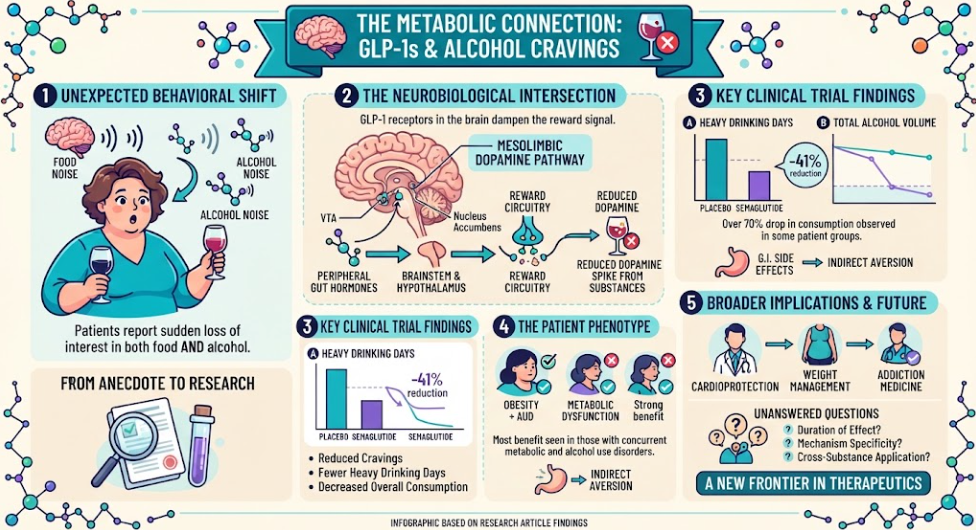
Patients who previously struggled with evening wine habits or weekend binge drinking noted that their food noise had a parallel in what researchers now term alcohol noise. The persistent mental chatter, cravings, and compulsive urge to drink seemed to quiet down overnight. What began as anecdotal patient chatter quickly caught the attention of neuroscientists, addiction specialists, and clinical researchers. Today, this off-label observation has transformed into one of the most dynamic and rapidly growing areas of psychopharmacological research, probing whether these metabolic peptide hormones can successfully treat alcohol use disorder.
The Neurobiological Intersection of Food and Addiction
To understand why a metabolic hormone heavily utilized for diabetes and weight management can impact drinking behavior, one must examine how the brain processes reward. Receptors for these peptide hormones are not localized solely in the pancreas and the stomach. Instead, they are densely expressed throughout key regions of the central nervous system, particularly the mesolimbic dopamine pathway. This intricate neural network governs motivation, reinforcement, and the anticipation of pleasure.

Both highly palatable foods and addictive substances like alcohol trigger surges of dopamine within this shared reward circuitry. In preclinical models, researchers have demonstrated that activating these specific neural receptors dampens the dopamine release typically provoked by substances of abuse. By blunting the rewarding neurological kick associated with a drink, the medication effectively deflates the compulsive loop that drives habitual consumption.
Neuromodulatory Pathways Across Compound Classes
| Compound Class | Primary Target | Secondary Central Effect | Impact on Reward Circuitry |
| First-Generation Peptides | Single Receptor Target | Hypothalamic and Brainstem Signaling | Moderate reduction in dopamine spike from substances |
| Dual-Target Agonists | Combined Receptor Targets | Broad Adipose and Central Distribution | Enhanced regulation of reward pathways |
| Triple-Target Agonists | Multi-System Receptors | Multi-System Energy and Neural Action | Potential synergistic dampening of addictive behaviors |
Emerging Clinical Trials and Human Data
While early enthusiasm was fueled by retrospective electronic health record reviews—which consistently indicated a lower incidence of alcohol-related diagnoses and hospitalizations among patients prescribed these therapies—the scientific community required rigorous randomized controlled trials. Recent clinical data published in premier psychiatric and medical journals have begun providing concrete answers regarding these behavioral shifts.
A landmark phase trial evaluated the impact of oral and subcutaneous formulations on treatment-seeking adults diagnosed with moderate-to-severe alcohol use disorder. The findings revealed compelling metrics regarding changes in drinking patterns:
- Participants receiving active peptide therapy experienced a significantly larger decrease in heavy drinking days compared to those on a inactive placebo, with certain cohorts showing substantial reductions.
- In combined clinical settings, overall alcohol consumption plummeted drastically among patients with concurrent metabolic challenges, shifting baseline metrics from hazardous levels down to moderate or low-risk categories.
- Patients reported lower scores on standardized naturalistic craving scales and experienced fewer alcohol-related social and physical negative consequences over the course of treatment.
Subtypes, Tolerability, and the Patient Phenotype
Not all patients respond identically, and clinical trials have highlighted important nuances in how these medications alter addictive behavior. For instance, studies testing older analog versions initially observed mixed results across broad, unselected populations, yet noted pronounced efficacy specifically within subgroups of patients carrying a dual diagnosis of metabolic dysfunction and compulsive drinking.
This intersection points toward an underlying metabolic-reward phenotype. Individuals whose compulsive eating habits and alcohol cravings share strong neurochemical drivers in the mesolimbic pathway appear to derive the most dramatic benefit from therapy. Furthermore, the gastrointestinal side effects common to this drug class—such as mild nausea, early satiety, and a general blunting of sensory pleasure associated with ingestion—may create an innate biological aversion to heavy drinking sessions, where high liquid volumes and rich tastes are typically prominent.
Key Pharmacotherapeutic Observations in Trials
- Patients treated for alcohol reduction simultaneously achieved substantial weight loss and improvements in metabolic biomarkers, illustrating a dual-benefit profile.
- Clinical trials consistently pair peptide administration with cognitive behavioral therapy, suggesting that these medications serve as a powerful biological scaffold that enhances traditional psychological interventions.
- Therapeutic protocols for addiction management often mirror metabolic titration schedules, starting at low initial doses and stepping up cautiously to minimize transient gastrointestinal friction.
Broader Implications for Addiction Medicine
The prospect of utilizing metabolic peptides to treat substance use disorders arrives at a critical juncture in public health. Conventional pharmacological options for alcohol use disorder have historically suffered from low patient compliance, modest overall efficacy rates, and under-prescription by primary care providers. Millions of individuals struggling with problematic drinking find themselves with limited, highly stigmatized therapeutic pathways.
If subsequent phase trials confirm current findings, the inclusion of these receptor agonists in addiction medicine protocols could entirely reframe how clinicians approach compulsive behaviors. Because these medications are already widely prescribed for metabolic health, cardiovascular protection, and weight management, expanding their clinical indications to encompass substance use disorders could reduce barriers to treatment. Patients who might otherwise avoid specialized addiction clinics could receive integrated care directly from primary care physicians, managing both metabolic and behavioral health goals seamlessly.
Future Directions and Unresolved Questions
Despite the palpable excitement across the medical community, researchers emphasize caution and call for larger, long-term phase trials before widespread off-label adoption becomes standard practice for addiction. Several critical questions remain open regarding long-term application:
- Researchers continue to investigate whether patients maintain their reduced alcohol consumption indefinitely while on maintenance doses, or if neurological habituation diminishes anti-craving efficacy over extended periods.
- Scientists are working to determine whether reductions in drinking are entirely driven by central nervous system receptor binding, or if they represent secondary downstream effects of general malaise or reduced caloric appetite.
- Given emerging data tracking parallel reductions in other compulsive habits during clinical evaluations, experts are analyzing how broadly multi-receptor peptides can be applied across diverse substance use disorders.
As pharmaceutical pipelines advance next-generation formulations, the intersection between metabolic regulation and neurological reward pathways will remain a primary frontier in medical science. For millions navigating the complex intersections of metabolic disease and compulsive behaviors, the unfolding research offers a grounded, highly promising glimpse into a more integrated future of therapeutics.
Expanding the Clinical Horizon on Behavioral Health
The investigation into metabolic peptides and substance use disorders has also opened doors into broader psychiatric and behavioral domains. Beyond alcohol, clinicians are observing parallel shifts in patient relationships with nicotine, cannabis, and compulsive shopping behaviors. This phenomenon suggests that the underlying neurochemical pathways influenced by these compounds are deeply tied to impulsive reward-seeking as a unified construct rather than isolated food- or substance-specific compulsions.
Psychiatrists are particularly intrigued by the potential to quiet the persistent mental chatter associated with various behavioral addictions. In traditional clinical settings, treating addiction often requires addressing profound psychological distress while patients battle unremitting physiological cravings. When a pharmaceutical intervention can successfully dampen the baseline neurochemical drive for the addictive substance, patients frequently report that psychotherapy becomes vastly more productive. They are no longer spending the majority of their cognitive energy fighting immediate urges, allowing them to focus on root psychological causes, emotional regulation, and long-term behavioral restructuring.
Furthermore, multidisciplinary research teams are evaluating the safety profiles of combining these peptides with existing psychiatric medications. Because many individuals struggling with alcohol use disorder also manage co-occurring conditions such as major depressive disorder, generalized anxiety, or post-traumatic stress disorder, understanding potential drug-drug interactions is paramount. Initial safety evaluations indicate favorable compatibility, paving the way for integrated treatment models where primary care doctors, endocrinologists, and psychiatrists collaborate to deliver holistic patient care.
Economic and Public Health Impact
The societal cost of alcohol use disorder extends far beyond individual health struggles, encompassing immense burdens on healthcare infrastructure, workplace productivity, emergency services, and criminal justice systems. Traditional treatment models—often reliant on intensive inpatient rehabilitation programs or specialized outpatient counseling—are frequently cost-prohibitive or inaccessible to a vast majority of the population. Consequently, the burden of untreated addiction continues to escalate globally.
Integrating accessible, primary-care-administered pharmaceutical therapies into addiction treatment frameworks could fundamentally alter these economic equations. If widespread clinical adoption reduces emergency room visits for alcohol poisoning, lowers rates of alcohol-induced liver disease, and decreases overall consumption-related morbidity, the downstream savings for healthcare systems would be monumental. Insurance providers and pharmacy benefit managers are closely monitoring ongoing clinical trials, recognizing that expanding coverage for these therapies could ultimately reduce long-term payout costs associated with chronic alcohol-related illnesses.
At the same time, policymakers are grappling with the regulatory and ethical considerations of off-label prescribing. While physicians currently possess the legal discretion to prescribe FDA-approved medications for off-label uses like alcohol reduction, insurers frequently deny coverage for non-indicated applications. This creates a socioeconomic divide where affluent patients can afford out-of-pocket treatments, while vulnerable populations remain locked out of potentially life-saving interventions. Ensuring equitable access as clinical indications potentially expand remains one of the most pressing challenges for public health advocates and policymakers alike.
The Role of Digital Health and Wearable Integration
As the medical field moves toward highly personalized medicine, the integration of digital health tools alongside peptide therapy is becoming increasingly prominent. Continuous monitoring devices, smart breathalyzers, and smartphone-based ecological momentary assessment apps allow researchers and clinicians to track patient behavior in real time rather than relying solely on retrospective self-reporting during clinic visits.
These technologies provide granular data regarding how patients respond during high-risk scenarios, such as social gatherings or high-stress professional environments. By correlating real-time behavioral data with pharmacokinetic profiles, medical teams can fine-tune dosing schedules to provide optimal neurological support precisely when vulnerability to cravings peaks. Furthermore, digital therapeutics paired with peptide administration offer interactive cognitive behavioral modules that reinforce healthy coping mechanisms, creating a comprehensive ecosystem of care that addresses both the biological and psychological dimensions of recovery.
Ultimately, the evolving science surrounding metabolic peptides and their profound impact on reward pathways represents a paradigm shift in modern medicine. By dissolving traditional boundaries between endocrinology, neurology, and addiction medicine, researchers are charting a course toward more unified, effective treatments for some of humanity’s most persistent and complex health challenges.
Leave a Reply